
I used the generator at Wordle.Net to make the cloud.

The email came from Mike Cohen, klezmer (Kleztraphobix) and jazz woodwind player, and my new hero."I just saw your mention about the CD I recorded and produced in Putti last year on your blog and want to thank you for your interest. I'm giving an interview for South African Jewish Radio on Friday and I just gave a lecture here in New York at Adelphi University a few weeks ago. If you have a few minutes, I'd love to share some of the story with you.
I had heard Smithsonian recording and was fascinated by it. About a year and a half ago there was a screening in New York of a documentary made for South African TV about the Abayudaya and decided to go. It turns out that I had met the director the night before at a gig I was playing (I'm a woodwind player)
I ended up on the Save Ugandan Jewery newsgroup and knowing they are coffee farmers I asked about buying some coffee. That opened a dialogue between myself and Putti's rabbi and community leader, Enosh Keki Mainah, He heard some of my music on the net and commented about how much he liked it. I told him I liked their music as well.
A few weeks later, Enosh tells me that his mother had written a lot of original music for the psalms and they wanted to record it but it was expensive. Did I have any advice? Without hesitating I told him I would go to Putti and we would record the music. This was November of 2008. My wife was 3 months pregnant so I knew that if this was going to happen, it had to happen soon. It was too late to apply for grants, so I sent a letter to everyone I knew and raised enough money to get myself over there and, if all went well, there was enough to do the recording. Enosh convinced me that there was a great studio in Mbale which is a big town about 10 km from Putti.After 17 hours of flying and a 6 hour drive north to get to Mbale, I go to the studio. The studio turns out to be 1 mic and an ancient computer! Hence the rawness of the recording. We had to make this work so we recorded the way they did it in the 50's. We put the singers around the mic and I would bring people closer or push them back to balance out the vocals. All in all, we got some great tracks. I took the vocals back and added the percussion, flute and bass and we had an amazing recording. The music is infectious and original. Putti is an amazing place for music.
As the web site says, all the money goes back to Putti. They are very poor and the money makes a very real difference."
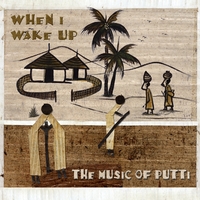 Some of you might remember a few years back when the wonderful Smithsonian Folkways album "Abayudaya: Music From The Jewish People Of Uganda" was making the rounds. Recently, a new album was released on the same theme...this time music by Jewish Ugandan's from the town of Putti. The album, Music from Putti, is part of a fund raising effort. If you like the video you should go grab a copy of the album from CD Baby.
 I love listening to recordings like this. First, I love hearing new (to me) Jewish songs and melodies. Second, I love straight-forward, no frills, no big production, albums. And this one's a joy from both counts. It's maybe a bit rougher than the Smithsonian Folkways album, but no less fun. If you want to know more about the Abaydayan Jewish in Putti, check out a short history on the Jews in Uganda website. On interesting bit on the website is the
(From JID) "Of making Jewish music there is no end, but how many contemporary composers of distinguished work in this genre have been featured on From the Top, National Public Radio's program about exceptional young musicians? Jeremiah Klarman, age thirteen when he appeared on the NPR show, may be the sole exception. Now seventeen, with a demonstrated mastery of styles from classical to klezmer, and with chamber, orchestral, and pop compositions under his belt, Klarman has turned his lavish and protean talents to choral music. A premier of his latest work, the cantata Hallel, Shir v'Or ("Praise, Song, and Light"), drawing largely on well-known verses from the book of Psalms, took place in late December at Temple Emanuel in Newton, Mass. Performed by the Zamir Chorale of Boston under the direction of Joshua R. Jacobson, it culminates in a room-rocking, soul-lifting Halleluyah! for chorus and orchestra."
"Jewish Samba (named TROPICASHER in Brazil) is a mix of Jewish and Brazilian music. We would like the public in the USA to know more about it as it is being an excellent tool for peacemaking, breaking barriers and approching people. There are Tropicasher Sambas in Portuguese, Hebrew and English as well as an excellent BOSSA NOVA made with the Anthem of Israel, haTikva, on www.tropicasher.com.br. For videoclips: or www.youtube.com/tropicasher"Here's a fun video from Tropicasher...
The Silver Age of American Jewish Music is Happening Now! And Why We're Missing It. (Extended Play)
Jewish music is exploding. Bands and labels and venues are multiplying. Rock. Hip Hop. Reggae. Punk. Klezmer. Sephardic. Choral. Chamber Music. Jazz. Chassidic-Pop. Breslov Techno. Niggunim. Pop-liturgical. Bible-gum. Beat Box. Boy Choirs. House. Socialist Yiddish Gothic. Indie. Weird hybrids. Avant-Garde experiments. Earnest
devotion. But we're not immigrants clustered in tenements, in range of a local Yiddish radio station anymore. A revolution is happening but we're scattered across a big nation with no common media to connect us....except the net. Will it be enough?
This Extended Play version of Jack's recent 5 minute Ignite Ann Arbor talk will be loaded with more music, a road-map of the contemporary Jewish Music scene, a case study in social-networking Jewish Music, and the greatest Jewish song you've never heard.
Bio
Jack Zaientz is the author of Teruah, a popular Jewish music blog. Jack has been interviewed regarding Jewish music by the Israeli National Radio and was recently ranked by the Jewish Telegraphy Agency as the #36 most influential Jewish twitter.
"A graduate of yeshiva -- an Orthodox Jewish religious school system -- Habash steers clear of mainstream rap topics as well, preferring to sing about his love for Judaism, his concern about youth getting lost in alcohol and drugs, and his anguish about the treatment of Ethiopian Jews in Israel."The clip on has a only few seconds of Habash rapping at the very end, but he's a wonderful storyteller.
 One of my favorite Michigan bands hits the best venue in the area.
 A klezmer band by way of Catskills cha-cha. I saw them live last year and had a blast.
 The Ann Arbor District Library invited to redo my Ignite talk in a longer form. Come join the fun!
 Truth in advertising...I'm now on the steering committee of this festival. For 1 whole meeting now. I'm going to be offering up my Jewish music knowledge and rolodex as well as my (limited, though enthusiastic) abilities in internet marketing. The following, though, is my personal take on the fest not an official blurb.
 Daniel Sieradski, of Jewschool.com, is a very smart, very engaged, and sometimes controversial figure in the Jewish community. Personally, I place him very high on my list of people I really want to chat with over beer and plan the revolution. Which revolution will vary by the mood we're in. There are about a dozen or so that I can think of.


Check out my talk at the Ann Arbor District Library last year. "Ignite Second Stage: The Silver Age of American Jewish Music is Happening Now! And You're Missing It!"


 Posts
All Comments
Posts
All Comments


