Showing posts with label orthodox. Show all posts

Sunday, July 15, 2012

Nehedar's music is catchy quirky anti-folk, but is it Jewish? And does it matter?

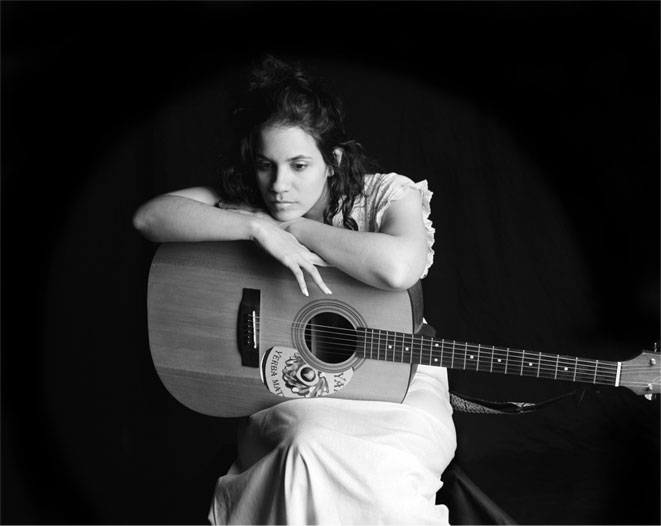
Nehedar, aka Emilia Cataldo, is an up-and-coming singer songwriter in the NYC area but not my usual blog post focus. While a fine musician and an observant Jew, her writing and stage persona isn’t obviously or easily categorized as Jewish. But Cataldo’s experience of becoming Orthodox and navigating pressures from the Jewish community (Orthodox, liberal, and secular) is well worth sharing and provides a lot of insight into the difficulties of being a Jewish musician in America.

Nehedar, which means means “wonderful” in Hebrew, writes quirky anti-folk music that puts a strong voice and guitar lead over rock, electronica, punk, and latin music instruments and rhythms.  On her new album, High Tide, results vary from delicate observational moments (Tinkerbell) to anthemic anarchist screeds (Count Down The Days Til You’re Dead). I dig Nehedar but wish she’d dig a bit deeper into her lyrical material.  I kept wanting to compare her to the disarming personal observations of Tori Amos and Amiee Mann, or the cynical world weariness of Firewater or the Pogues.  Her lyrics, though, are a bit too shielded and externally focused. That makes them come across a bit superficial.

Here are the tracks from High Tide. Check 'em out and see what you think. Definitely worth a listen.  For more info on Nehedar and High Tide, check out her website.


As Nehedar and I were emailing back and forth I decided a more formal interview might be a good way to get share her story and she graciously obliged.

Teruah: This is a Jewish music blog so we’ll talk both music and religion, but let’s talk music first. You’ve been active in the NYC singer songerwriter scene for a while and have got a new CD “High Tide” out. In your Pens Eye View interview you were asked about your style and said “I play with genre so much that it is pretty hard to define (my sound). Anything from electronic, punk, folk, rock, and then I’ll throw in Latin beats. Then my tonal approach will vary from sarcastic to dead serious.” From my listen to the HIgh Tide, that sounds right on. I think, though, it's fair to say that the songs on High Tide are very voice and lyric centered and give the audience the experience of listening to you singing to directly to someone standing just a bit offstage. Lots of “you” in the lyrics. So, who are you singing to?

Nehedar: The you’s on this record are everything from me, to the listener, a lover, a robot, society in general, hashem.. fantasy characters...

Teruah: There’s mix of instruments across the tracks, which range from voice and strummy guitar to rock arrangements to heavy electronica. What are you playing yourself and are the other instruments your regular band or are they friends borrowed for the album? How does this compare to your live show?

Nehedar: I play most of the guitars and electronic keyboard riffs, I have preferences for certain basslines that I write. I work with producer Craig Levy (Little Pioneer) in his Brooklyn studio. He also plays bass and drums and some guitars and keys. The band is a separate entity. Only a few songs in my past 5 albums had actual live band members on the recording, but none on this album. The trumpet on "Take It Apart" is the amazing Mike Shobe who is in the band on Louis C.K's show. He's fantastic and his solos make me very very happy, but he's a session player and if I perform this song live, it will be with my friend Dan Wagner of the Long Island band "Penguin Revolution."

Teruah: The reviews I’ve seen of High Tide (Brooklyn Rocks, LyricLounce, Jamsphere, PensEyeView) were pretty positive, but what’s up with that Heeb magazine post? Chicky (from HipsterJew) had some snarky fun busting on your song “The Song No One Hears.” Honestly, I have little use for Heeb magazine, their music writing in particular, but even for them that was petty. Did you see that one coming?

Nehedar: I don't think he knew what he was doing. I'm fairly certain that he was assigned a comedy hit piece. I actually acquiesced to be "made fun of" in order to get some coverage in Heeb, but I assumed that it would be by someone who is familiar with writing about music. It was totally my fault for assuming that. That writer didn't even hurt my feelings because he was so dumbly dismissive. If he had actually analyzed my work (at all!) and found it lacking then I would care more. It's so important to remember not to care what any critic says though! I hope I can get to that point, whether it's a compliment or an insult, to remember their only purpose is to help you spread the word. The fact is that I got a lot more positive attention via the comments in that piece. At the end of the day Chicky was more insulted by that whole fiasco than I was.

Teruah: When we started emailing, you mentioned that you’re a shomer shabbas Jew and that you got your start playing gigs with Jewish themed music groups Pharoah’s Daughter and Jake Marmer's Mima'amakim. How did that hookup happen?

Nehedar: Jake Marmer was a friend and Mi'ma'amakim was an alternative poetry journal that he started. They had great launch events where their writers would read their poetry and there would be fantastic music: Pharoah's Daughter, Raquy & the Cavemen, Pitom, Jon Madoff, that sort of thing. I guess he just saw something in me that made him want to put me on the stage!

Teruah: One thing that gets debated is how much there is, outside of the Orthodox / Chassidic community, a Jewish music scene. What do you think? Were you playing in a Jewish music scene? What about now?

Nehedar: To me, there is very much of a Jewish music scene, but I'm not sure about the distinction of religious vs. secular. I think it's more of a matter of affiliation and friendships. Some of the most religious people are in the least religious seeming bands and vice versa but I won't name names!

My first couple of shows were with Mi'ma'amakim and then I got my stage legs steady by performing at a weekly event called Hasids meets Hipsters where the amazing Sway Machinery were regulars. My band members have all been Jewish (except my dad!), and many went on to form their own bands (Glaser Drive, Stolen Brown Evergreen) We used to play shows together for years...

I've produced shows in NYC with Rav Shmuel, Y-Love, Aliza Hava, BlanketStatementStein (Back from the UK), Mick Lewis & the Fine Print, and played at shows with Sarah Aroeste, Chana Rothman, Jezzy & the Belles, and on and on. I had a good friend and roommate in college from Moshav Modi'im (the Carlebach yeshuv) I got to know all sorts of young Jewish musicians, some of whom are still active. When I first started playing live, I had the amazing Hayyim Danzig of Blue Fringe as my bassist, and this was at the peak of their popularity - he's on a couple of tracks on my first album! So yes, I think there is a scene in NYC at least, it might need a little watering now, but it's got strong roots!

Teruah: How’s it been juggling the pressures of being a gigging musician while also being an observant Jew? Are your fans aware of this? Has it created any positive or negative expectations you’ve had to deal with?

Nehedar: It's really hard. Really. I think the hardest part for me is that, there is very little opportunity to get bigger using the mainstream networks that are in place (festivals, conferences, events etc) without performing on Friday night. If someone contacts me about performing at their event, that event will usually be on a Friday. I don't really get asked to play at Jewish scene events. I also have limited opportunity to network and support other musicians in the mainstream world (either supporting them onstage or off) because so many important shows are on Shabbat. I end up in a double bind with this situation, I am too religious for the mainstream path, and not religious enough for the Jewish track (also the wrong gender).

Teruah: How about the religious community? Liberal Jews often don’t get the idea of observant Jews who aren’t cloistered inside the ultra-Orthodox / Chassidic world. And that world often doesn’t get how someone could be a Jewish musician who isn’t Torah oriented all the time. And then there are the religious limits including kol isha and sefira to deal with. How do you navigate all this?

Nehedar: Truthfully I don't navigate it well, it's all very awkward. As you can tell I haven't made any kind of peace on this issue. I strive to be good at what I do, and true to what I believe. Kol Isha is bad news. I think it's flat out incorrectly followed and understood. Addressing this is so low on the priorities (or maybe the opposite of the priorities) of anyone with any power in mainstream leadership that I don't think we'll see a change any time soon. I will be writing a guest blog on Jewesses with Attitude this month that addresses this perspective in greater detail. I thank G-d that there are rebbeim like Rabbi Avi Weiss, Rabbi Saul Berman and schools like Drisha and Yeshivat Chovovei Torah here in NYC that look at orthodox Judaism with a progressive lens. I was fortunate to attend Yeshiva University and to have been taken in by a wonderful modern orthodox family in 1999. Without them I would have believed the party line and thought that uttering a sentence like "I'm supposed to nullify my own mind to the torah" actually make me sound AWESOME. My Yeshiva University education provided me with some historical context of our culture's development which helps to put it in perspective. One great class with Rabbi Hidary (I forget his first name) in Yeshiva University taught me so much about the 2nd temple period including the development of the babylonian talmud that I wonder, If people were aware that the lifestyle of the Jews in Bavel was closer to modern orthodox than so called "ultra orthodox," how would that change or improve things? People learn Gemara, they don't tend to learn about the culture in Bavel from a historical perspective.

As a musician, I'm permitted to perform on Sefirah, but I won't plan a big event in NYC during sefirah out of respect for my fams (a term lovingly borrowed from NYC band Fifth Nation).

Teruah: Are you FFB (Frum from birth) or bal teshuva (came to Orthodoxy later in life)? I’m guessing the latter, right?

Nehedar: I came from a biracial nuclear family with no culture other than itself. When I chose to be orthodox, it was mainly because I needed the discipline and guidelines. My parents intentionally raised me without any boundaries or any culture to glean from (other than their counter culture). So I'm surprised, when you ask, how my music is Jewishly relevant, how much I want to have a real answer. I want to say that as a student of Jewish mysticism, I infuse my work with mystic concepts, I want to say that since my social identity is orthodox, I write from A Jewish Perspective, or that when, in a song, I am begging for help or for guidance, that I'm addressing a concept of G-d that is informed by Jewish teachings. But I don't know how much that stuff matters. If Jewish people want to see Jewish culture being very very Jewish, with bagels, lox, klezmer, etc. I will never be that because I don't want to be that. If I tried to do that kind of thing it would be false and I don't intend to spread more false messages in the world.

Teruah: I totally get that. The Jewish world is pretty segmented with each segment having its own set of expectations for music or art that is “Jewish.” In the last week I chatted with an Orthodox musician trying to convince him that Jewish music can be more than music that directly praises God (e.g. another interpretation of the Psalms) and talking with some secular “bagel” Jews who love klezmer bands and Israeli pop bands because, since the musicians are Jewish and the music has a cultural connection, the music makes them feel Jewish without asking them to deal with religion. Situating yourself in all of that is tough, not doubt.

Speaking of Jewish community reaction, in our first email you lamented that the Jewish hipsterati pretty much ignore you. I’m sympathetic, the contradictions of your life as a gigging musician and observant Jew peak my interest and should theirs, but I’d also like to challenge you a bit there. Like most Jewish American musicians, but unlike Pharoah’s Daughter or Jake Marmer, you’ve made the perfectly reasonable choice of not having your Jewish identity be central to your music or stage identity. Why should the Jewish hipsters, who are looking for ways to more publicly navigate their own Jewish identity, connect with you? What do you think they’re missing?

Nehedar: When I referenced "Jewish Hipsterrati" I was speaking more to say, Heeb, and the like who will write a long honest musical review of Yael Meyer (her mainstream identity is no more Jewish than mine), for instance, but will approach a review of my music with utter distain. I don't have illusions that I'm as Jewishly relevant as (the uber Jewish artists I enjoy like) Golem or Sarah Aroeste, but if I were to become successful, you know the mainstream Jewish publications would eat up my story with a spoon.

I guess I just wish that more people were like you, intellectually curious, and open to new things. I don't know if anyone's life is missing the presence of Nehedar music. But they won't know unless they check it out for themself and, personally, I have a lot to say and I'm tired of talking to myself!

Teruah: I get that. I’ve lamented a number of times that there are few magazines or websites that are interested in exploring what it means to make Jewish music or to be a Jewish musician regardless of how those things are defined. Since so much of Jewish life is establishing our Jewish identities in a complex secular and religious world, it’s frustrating that most magazines/websites seem to just pick their default definition, fawn on anything within it and marginalize anything outside it.

And I agree...I hope more folks in the Jewish world check out your music.

Before we wrap up, any additional info you’d like me to pass along? Any upcoming gigs we should know about?

Nehedar: Thank you so much Jack! I'm playing in Milwaukee, Wisconsin at the Circle A Cafe on Sunday July 22 at 9PM. I'll be accompanied by my dad on Saxophone and will be dressed in costume and shooting a music video that night with the audience!

Thursday, July 5, 2012

Introducing, The Y-Studs

The Y-StudsThe great thing about college campuses is there's always another gang of vocalists ready to dedicate their vocal chords to imitating drum kits, guitars, and synths in the name of acapella music. In the Orthodox world, there is extra glory for the brave acappelites... they are single-handedly (single vocal-cordedly?) saving the Orthodox community from a boring music-free Sefira and saving concert promoters from having to rent back-line gear. 

While the Maccabeats may currently be reigning supreme in the Jewish acapella world, Yeshiva University's Y-Studs are on the scene with a new video and album out that should get then a lot of attention. The video, which is their adaptation of Reva L'Sheva's classic "Ahavat Israel Baneshama" (lyrics) doesn't have the breakout flair of the Maccabeats pop-music mashups. But the song choice is great, the vocals are fine and, if you're into Jewish acapella, it's well worth checking out. The video, I should note, is one of the stranger one's I've seen lately. Did someone turn the Village People loose on YU's campus? Just asking.


If you dig the song, it's worth checking out Reva L'sheva. They were a wonderful post-Carlbach group that was active from the mid 90's through the mid 00's. Their front man, Yehuda Katz is still active and put a new album out recently. Reva l'Sheva's albums are still available as well. 

Tuesday, July 3, 2012

Moshe Hecht's New Video

Moshe Hecht, a Hasidic rocker with a radio friendly 90's college rock sound, dropped his debut album last fall.  I blogged about its first single, Lamplighters, briefly when it first came out. Half a year later, and a brand new video for the album's lead track "Believers" is out.  The video seems to be based on a live concert recording from the Knitting Factory.  Based on the video, I can see Hecht picking up a lot of Blue Fringe fans.

Check it out...


You can grab the debut album and the live recording of Believers from a variety of places including Mostly Music. For the price of your email address for his mailing list, you can get the rest of the Knitting Factory concert (without Believers) at Hecht's website.

Thursday, March 15, 2012

#NoseJobGate - The Groggers and Plastic Surgery Disasters

Ah, nose jobs. I remember being a teen and having my grandfather promise me that if I ever wanted a nose job he'd pay for it. Huh? I remember thinking. Why on earth would I want that? Now my brother...he's got serious beak.... It's not just my grandfather, though. Our collective self-consciousnesses about our over-sized honkers comes up regularly in both self-deprecating jokes and in trips to the plastic surgeon. Occasionally, it even bubbles over into the mainstream culture. Maybe it's a way to identify (and identify with) the outsider in last spring's episode of Glee, for example, or to make unexpected (and awkward) connections between actress Halle Berry, her Jewish cousin, and the viewing audience of the Tonight show back in 2007.

Mostly the whole idea is about as cliche and tacky as JAP (Jewish American Princess) or circumcision jokes. (Didja hear the one about the.....)

This week's entry into the Nose Job hall of fame is "Jewcan Sam (A Nosejob Love Song)" by The Groggers. The song, which has now been viewed over 120,000 times, is a funny guy-wants-girl power-pop joke-fest. Get your nose circumcised. Pinocchio never got Snow White. Funny stuff from a band known for sharp humor. (See my previous post on The Groggers)

Here's the song.

"Jewcan Sam" (A Nose Job Love Song) - The Groggers [Official Music Video]


And then it hit the press. I saw it first on the ABC News website under the banner "Miami Plastic Surgeon Under Investigation After Commissioning 'Jewcan Sam' Music Video." For real? How did ABC even hear the song. The Groggers are a relatively unknown (though talented) Orthodox Jewish rock band. But then it came clear...the nose job song and video were paid for by an Orthodox Jewish plastic surgeon in Florida. And hence the scandal. This is, the news narrative states, payola for promotion of plastic surgery to teens. And then the scandal deepened. The leader of the Groggers actually got a nose job himself as part of the deal. This has all the makings for a media feeding frenzy.

The Miami Herald, NBC, the Sun-Sentinal, UPI, and the Huffington Post all weighed in. So did the UK's Daily Mail and Jewish outlets The JTA, The Forward, and Shalom Live. Even the industry site OutpatientSurgery.Com commented. (And to get really meta, I'm writing this post about it citing all those other rags).

And then Groggers band leader Doug Staiman did a great radio interview capitalizing on the whole affair on 107.2 FM.

The verdict so far? The plastic surgeon involved may have violated ethics rules in funding the video. The band may have violated good taste and judgement by taking the funding. The song is pretty darn good and pretty darn ambiguous as to its stance on Jewish nose jobs. Which is all just fine with me. The Groggers are notorious for writing funny songs that tweak the Jewish community. Have at it boys.

Thursday, September 8, 2011

The Groggers. Holding a fun-house mirror to Orthodox Jewish life.

To paraphrase one of my favorite rock critics, (Paul Williams "Rock and Roll The 100 Best Singles"), there are two primal rock and roll traditions.... angry stupidity and cheerful stupidity. But there's a counter tradition too, smart stupidity. The court jester. The smart guy (or gal) playing dumb. Sometimes with snarky bite, like Jello Biafra and the Dead Kennedys. Sometimes with nerdy-bafflement, like They Might be Giants. But always that sense that you'd better press rewind and listen to that one again. They just said something that needs to be heard.

The first time I heard The Groggers, I didn't press rewind. The song was Get, and the band bumbled along with a power-pop finger shake at a guy who didn't deserve his girl. A well-played Orthodox novelty song, but (to my ears at the time) nothing more. I wasn't hooked yet. But tonight they sent me their new video "Upper West Side" and they got me. Court Jester. Smart Stupidity. Press Rewind.

Check it out

"Upper West Side Story" - The Groggers


Under the wide eyed naivete of singer/songwriter L.E. Staiman's vocals, is some sharp satirical bite. The phrase "I want to live on the Upper West Side where the girls always stay 29, accountants by day, speed daters by night" was delivered deadpan, but dead on the mark. (As are the hysterical West Side Story "be cool" finger snaps in the video.)

Ok, now go listen to the even better Groggers ballad "Eishes Chayil." I winced when I saw the title. Eishes Chayil, the Woman of Valor, is a regular motif in Orthodox pop music. Derived from a (sometimes touching, often awkward) Shabbat ritual, the Eishes Chayil pop song is usually over-earnest and condescending in it's celebration of the vague awesomeness of the Jewish woman. (Here's Orthodox crooner Yaakov Shwerky singing a representative example.) The Groggers skewer it beautifully. Staiman's version pushes the vague detachment of the Eishes Chayil concept as far as it will go... straight into a Weird Al Yankovic-style voyeuristic creep-fest. "If you ever need me... I'll be right out your window."

In a post on Frum Satire that went up this morning, Heshy Fried lauded them for being a Jewish band that didn't spend their time singing about religious topics, but instead sang about (Orthodox) Jewish life. That's true, and Fried's right that the Orthodox community needs more bands like that. But I think that misses the point a bit. The Groggers aren't singing about frum life, they're holding up a fun-house mirror to it.

Under their dumb lyrics are a smart insiders critique of Orthodox life. And that's brave thing to do. Smart stupidity. Court Jester. Rock and roll.

Update: I forgot to mention that The Groggers debut album "There is no I in Cherem" dropped in August. Go get it.

Saturday, July 2, 2011

The Wondering Jew Talks Jewish Music

I was catching up on Jewish music vids to hit Google recently and stumbled across this gem. The Wondering Jew, an anonymous "Benjamin something-that-sounds-like Chielminitzy", an Orthodox Jew in Brooklyn, recently started a video blog. One of his first topics is frum Jewish Music, and why he just can't get into it. If you want a crash course in contemporary frum Jewish Music that's laugh-out-loud funny in spots and dead on accurate, check it out.

The Wondering Jew: Jewish Music


To be fair, there are some really good and really interesting musicians who are frum and playing to frum audiences. Yosef Karduner may not be Sting, but his voice and music work are as deep as it gets. And I have to differ...I really dig Lipa and actually listen to Carelbach for the music as well as the stories. Really. But still, this is priceless.

Thursday, June 30, 2011

Reb Yosil Rosenzweig - Still rocking and davening

You want to hear a track that rocked my world recently? Press play.


Now go read the story.

Wow. What an wonderfully simple, wonderfully intense recording and an immediate add to my playlist.

So who rocked my world? Reb. Yosil Rosenweig, my (handsome and modest) pal Benji's dad, and long time Jewish music fixture. I want to say icon, but can't quite. Reb. Yosil has written songs and made music with two of the most important folks in Jewish music in the 20th century; Chassidic rabbi and folk singer Shlomo Carlebach and Avraham Rosenblum, founder of the Diaspora Yeshiva band, the seminal Israeli Jewish rock group. But he, himself, never rose to the icon status of Carlebach or Rosenblum. But, icon or not, Reb Yosil has been making great Jewish music for a long time. And as evidenced by the track above, he's still doing it as well as anyone.

Pitchu Li album coverAbout a year ago Reb Yosil released Pitchu Li, his first solo album. It's a recording of Reb Yosil with his Kosher Gravy Company live in concert, with Reb Yosil telling stories, giving Torah, and singing some of his many songs. He's backed by a fine, bluesy jam-band. Doing a more detailed review of the album had been on my to do list for a while (sorry Benji), but I'd had trouble getting started. I'm not much of a fan of fine, bluesy jam-bands. Just not my style. And Reb Yosil's voice is a bit rough in spots. I bet I would have loved the show... but the album? Good, but not great.

But then I heard Reb Yosil's Rosh Chodesh recordings. Particularly the Mah Ne'Daber. And I was hooked. There's a fire to his solo recordings that I didn't get from Pitchu Li. Mah Ne'Daber is incandescent. I now look forward every month to his next Rosh Chodesh song. They're offered monthly for free download. If you've missed them, go get them. Or wait a couple weeks. Pretty soon they're going to get bundled up as Reb Yosil's next album. It'll be a great collection. Then he'll start the process over with a bunch of new songs, one per month.

I got the chance to sit down recently with Reb Yosil and hear a bit of his life story. I was really interested in finding out more about his relationship with Carlebach and Rosenblum and, given his obvious talent, why he ended up in their shadows. And why the new recordings now after all this time? The answer revolves around the life of a Canadian pulpit rabbi and musician who found himself in Israel in the late 1960's, a moment when North American ba'al teshuva were coming to Israel in waves and creating a new Jewish music scene that mixed rock music and spirituality, Zionism and Torah.

Reb Yosil and Shlomo CarlebachReb Yosil, far right with glasses and white yarlmuke, and Shlomo Carlebach, left with silver yarlmulke and guitar)

Reb Yosil moved to Israel in 1968 for "a four year summer." During that time he started composing music and met and played with Carlebach. Like Carlebach, Reb Yosil was interested in being able to use music as an emotional component of prayer. (And like everyone who knew Carlebach, he has some great Carlebach. Listen to the intro to Reb Yosil's Gam Ki Eilech for classic from the days of the Yom Kippor war.) At the same time he met and married his wife (whom he met at a Carlebach wedding) and opened a restaurant, and in 1971 started a band with Avraham Rosenblum called B'nai Tzion that included original material and popular Jewish song by The Rabbi's Sons and the Simchatones. B'nai Tzion played regularly on the stage in Reb Yosil's restaurant and at NCSY event. At that time he composed the songs Tzadik Katamar Yifrach and Pitchu Li, songs that went on to be hits for Rosenblum's next band, The Diaspora Yeshiva Band. Performed by DYB, Pitchu Li won Israel's 1976 Chassidic Song Festival. In 1978 DYB won again, this time with Reb Yosil's song Hu Yiftach Libeinu.

Reb Yosil (guitar, on right) Avraham Fried (the fellow with the beard who's standing and singing) and friends
Reb Yosil (guitar, on right) Avraham Fried (standing and singing) and friends

But DYB won these songfests without Reb Yosil, who was never a member of the band. Yosil wanted to be a rabbi, not a full time musician. Prompted by that and the opportunity to work with the Canadian Zionist organization, Yosil and his wife had already moved back to Canada when Pitchu Li won the festival. Yosil spent the next 30 years as a pulpit rabbi and raising a family, using music in his rabbinic work and playing community concerts and kumzitz. After a recent bout with illness, Reb Yosil retired from the pulpit and started playing music regularly again, putting together the Kosher Gravy Company band and playing concerts around Ontario and Detroit.

It's pretty exciting for a Jewish music geek like myself to see someone writing and performing new material in the style that was popular in Jewish music the late 1960's / early 1970's at that birth of Jewish rock. Particularly, it's exciting to see that music from someone who was there at the time and contributed classic songs to the repertoire.

Sunday, April 3, 2011

The Kosher Symbol Blues

Ok, so with my being crazy busy with the Detroit JCC's Stephen Gottlieb Music Fest we haven't gotten started on our Pesach cleaning yet. I know what will be my soundtrack this year, though, Mendel Singer's "Kosher Symbol Blues." Singer's not going to give Mare Winningham a run for the Jewish country title, but "Kosher Symbol Blues" is a hoot and his song "Bible" is lovely. Singer's guitar playing is also quite good and carries his voice well. I expect to hear some of these songs start making the rounds on Washington Jewish Radio and other Jewish radio stations.


Wednesday, February 23, 2011

Rinat Gutman: Orthodox Woman with a Voice

There's a minor kerfluffle brewing on the Jew music scene lately. Jewish musician Naomi Less has called out the Jewlicious festival for not featuring enough women artists in her blog Jewish Chicks Rock. She basically called the progressive festival an Orthodox front. She got a response today from David Abitbol, aka Jewlicous, politely telling her she's got it all wrong. I'm not sure what to think. From my experience working on the Detroit JCC's Stephen Gottlieb Music Fest there are some many different voices, opportunities, and constraints involved in getting a festival staged it's amazing they happen at all. It may be that the subtle constraints that come from the individual tastes of the Jewlicious Fest presenters are leading to this outcome? Or maybe Less is just making noise about nothing?

One nice thing about Abitbol's response was the list of female performers that have been featured at the Jewlicious festivals recently. I'm familiar with most of them, but there are some new (to me) names I'll have to track down and some names that I've heard of but haven't featured lately or ever.

One that list is Israeli rapper, Rinat Gutman. According to this great interview in the Yeshiva University Observer, Gutman comes from a Charedi Zionist background with some ties to Breslov and Chabad. Gutman performs some women-only shows within the Orthodox community, but lots of shows for mixed secular crowds (such as the Jewlicious festival), too.
"In my rap I speak about things that come from inside, about thoughts and insights that come to me in response to things that happen to me in life. At this point in my life, the central message that I am trying to convey is about the western culture, which dominates everything. I talk a lot about the ramifications of this on our lives, and in my opinion, the implications for the approaching time periods are destructive.

For example, in my song Shekel v'Chetzi [shekel-and-a-half] I talk about our lives using the metaphor of a shekel v'chetzi store [dollar store]. In my eyes, this is the ultimate representation of western culture - the concept of instant gratification. You can find things almost for free, but you pass up on quality along the way. So I mention in my song all types of things that you can "buy" in this type of store, such as love, a professional degree, friends, etc.

I want to make a difference in the world of Jewish music because, in my opinion, it can still develop more. I want to take commonplace topics and make them humorous and lighthearted. For example, I have a Chassidic short story in a rap that talks about shidduchim in a funny and unusual way - it's about a groom who's too short and bride who's too tall, etc..
Good stuff, too, from what I've heard. I haven't seen her yet, but hope to. Get more info from Gutman's MySpace, Facebook, and Twitter pages.


Sunday, February 13, 2011

Diaspora Yeshiva Band "Live on Mt Zion"

As I've noted before, Avraham Rosenblum of the Diaspora Yeshiva Band is pretty much the Mick Jagger of Jewish music. DYB, with Rosenblum at the helm, formed in the mid 1970's as the ba'al teshuva movement in the US was bringing newly Orthodox Jews to Israel. DYB helped this generation find their voice and helped create and popularize Jewish themed rock among religious Jews in Israel and the US. If you see a Jewish musician pick up a guitar and sing in Hebrew, their touchstones may be Sholomo Carlebach or Debbie Friedman. If the guitar gets plugged in ... the touchstone is DYB.

DYB recently released "Live at Mt. Zion," a fantastic video that's part concert video and part documentary. It captures the band at their prime in 1982 playing a concert on the roof of King David’s Tomb on Mt. Zion, Jerusalem. This is our history, gang. And it sounds great.

Diaspora Live on Mt. Zion DVD Trailer


For more info and to get a copy of the Live at Mt. Zion, check out the DYB website.

By the way, former DYB member Rudy Harris wrote a nice article on the impact of DYB which includes his "geneology" of Jewish rock. Check it out.

Friday, November 12, 2010

Kol Achai at Shea Stadium. Spoiler Alert...The Cubs Lost

Everyone once in a while I think I've got this Jewish music thing, and then the rug get's pulled out from under me again. My buddy Noah did that to me when he introduced me to a strand of Orthodox pop music that I didn't know anything about. It includes bands like Kol Achai, Abie Rotenberg & D'veykus. Let me start by saying I'm practically clueless about these bands and will be trying to piece it together over the next few months. What I know is that these bands were primarily active in the 80's, played a lot of NCSY camp events, and had a very (for the time) contemporary pop sound. They're connected, I think, with the Israeli scene that produced seminal Jewish rock pioneers Diaspora Yeshiva band and their repertoire includes Israeli tunes as well as original. But I'm really not sure about any of this yet. These bands have little presence on the web other than discographies on some of the Orthodox Jewish music catalog sites. What I do know is that I'm a fan. They're some great material in these discs and they're a pointer to a part of Orthodox Jewish culture that I was completely unaware of.

As I said there's precious little material on these bands on the web, but here's a great clip. It's Kol Achai singing The Star Spangled Banner at Shea Stadium on Sept 13, 1993. Spoiler alert...the Cubs lost.


Hopefully I'll be back with more info on this scene. If you were part of it, as a musician or audience, please get in touch with me.

Update: I just got an email from Avraham Rosenblum of the Diaspora Yeshiva Band. He pointed out that while he respected mainstream Orthodox groups like Kol Achai and "Abie Rottenberg's soulful tunes" that DYB was part of a very different ba'al teshuva scene that "The Megama Duo, Piamenta, Yitzhak Attias, The Baal Shemtov Band and Rava Mehemna were our contemporaries- all returnees to Torah observance. " I really appreciate Avraham's update. For someone who wasn't there piecing this together is tough. By the way...I should note that DYB just released an awesome DVD of one of their 1982 concerts. It's great.

Thursday, March 4, 2010

Yehuda Green's Yearning and Lipa's Haggadah

I get a lot of announcements about new albums, way more than I can keep up with. But I got two today from the Orthodox / Chassidic music company, MostlyMusic that I wanted to share, primarily because I plan on buying both of them myself.

Yehuda Green's new album, YearningThe first is the new Yehuda Green album, Yearning. I was only turned on to Green a few weeks ago, when I was preparing for my Ann Arbor library Jewish Music talk. I was going to spend some time during the talk discussing the Orthodox / Chassidic music scene and was looking for a good example of the neo-Carlebach sound. While there are a number of musicians who qualify, Green is one of the standouts and I played a clip of his music during the talk. I found it very moving and decided to grab the album.

To give you a sense of what Green's about, here's a video of Green recorded for the Vos Iz Neias website. For more on Green, you can check out a 30 minute interview he gave recently to VIN.

Yehuda Green preforms for VIN Readers


Lipa SchmeltzerThe second album is from Lipa Schmeltzer, one of my favorite Chassidic shiny-shoe singers. Lipa is about as funky and out-there a musician as I've run across. I had his previous album, Poshiter Yid, on heavy rotation when I first got it (and have his bumper sticker on my car.) This year he's coming out with his own Pesach haggadah and accompanying album. I'm honestly not sure what to expect. The video below, which is supposed to be a promo, doesn't really help much. An album of new Pesach songs? Traditional songs? Him narrating a seder? Not sure. But it's bound to be fun. I'm always on the lookout for new Pesech music, so I'll pick it up. It can be found over at Mostly Music.

LIPA'S HAGUDA

Monday, January 4, 2010

Jewish Music, Texas Style

There's a bit of unconscious chauvinism in Jewish America. The standard image is that all the Jews are in New York, except those that moved out to LA. Of course that's nonsense, there are small and large Jewish populations all over the US. Detroit has had a huge Jewish population since the mid 1800's and Cleveland has been a Jewish center since the 1700's. Oh yeah. And Texas too.

Other than my thing for Jewish cowboys, I too forgot about the sizable Jewish population in the Lone Star State. I was reminded recently by an email from Avraham Solomon. Solomon is Jewish simcha musician in Houston with a stellar pedigree.
"Avraham Solomon's musical career started at a very young age with the Miami Boys Choir. He was a star soloist and is featured on several MBC albums including Torah Today, Miami Experience 1 and later on as an adult at the Miami Experience 5 concert in Nassau Coliseum performing in front of 15,000 fans. Avraham got involved in vocal performance with orchestras shortly after high school where he performed with a variety of Jewish wedding orchestras and bands on the east coast including: Neginah Orchestra, Steven Scott, Aish Orchestras and Singers, Barock Orchestra, and many others. During this time he also evolved musically and vocally by joining Jewish A capella groups such as Kol Zimra and Harmonia entertaining at bar mitzvahs , bat mitzvahs, engagement parties, shul dinners and other events. Kol Zimra enjoyed working with Avraham and asked that he be featured on thier first album:Kulanu Beyachad. Avraham's musical repertoire also includes cantorial experience for the High Holidays as well as piano."
He wanted me to know that Jewish music was alive and well and Texas. Which is a great thing. I get down to Houston a couple of times a year for work and hope to meet Solomon one of my trips. Here he is gigging at a local Jewish wedding. He's got some serious pipes.


And some serious prog-rock keyboard action. Love it.

Lag B'omer at the Young Israel of Houston


You can also hear him do a great one-man band simcah set, here.

I'm glad to hear Texas represent. If you know of great Jewish music from offbeat locations, please drop me a line.

Saturday, October 17, 2009

Notes on my "Silver Age of Jewish Music" talk

I normally don't post on Shabbat, but I'm up at 3 in the morning and my brain is buzzing about my upcoming Ignite Ann Arbor talk "The Silver Age of American Jewish Music is Happening Now! And Why We're Missing It." I posted earlier this week about the talk, so I won't repeat the details here. Other than to say giving a 5 minute talk is not easy and I'm more than a little bit stressed. I can't convey a real nuanced story in 5 minutes. Anything I say will be fundamentally wrong or misleading in some major way. I just have to deal with it.

I've spent the last 2 hours working out a rough storyboard of my 20 slides. I get 15 seconds for each one. Whew. Here's a pretty close approximation of what I sketched out. Sorry the formatting's crummy, but it's 3 am. Comments anyone?


#DesignNotes
1?Fast intro: I write a blog on Jewish Music. Not a musican
or expert. Just a rookie fan.
2Words/album covers 'klezmer/Dave Tarras', Cantorial/Jan Peerce', 'theater/fiddler', 'folk/hava nagila'I knew a few random bits that had come through what passed for a national Jewish musical culture in the 1970's.
3Avant-garde / Kelka Red & Frum-Pop / LipaI found this. (play 7 second music clips)
4Jazz / David Chevan & Reggae / Matisyahu(play 7 second music clips)
5House / Ghettoplotz & Misrachi Chamber / Davka(play 7 second music clips
6Sephardic Indie / DeLeon & Pop Liturgical / Sam Glaser(play 7 second music clips)
7Hip Hop / Y-Love & Yiddish Blues / Wolf Karakowski(play 7 second music clips)
8fill screen with album coversAnd lots more. Art music. Bible-gum. Yiddish Gothic. Boy Choirs. Niggunim. All happening now. But how come I didn't know about this?
9Pictures of 1930's Jewish NYC
Because I don't live here. I'm not living in a predominately Jewish are w/ defining a Jewish culture & media
10Picture of 1940's Catskill resort
The Golden Age of Jewish Music was in the 20's through 40's, right along with the big wave of Jewish immigrants from Europe
11Picture of Jewish big band / swing albums?
Who like most immigrant groups clung to culture & community while at the same time radically assimilating and reinventing themselves
12pics of a yiddish radio station, theater, newspaper and the Eldridge Street Synagogue. Their media, and cultural lives, were tied up the local Yiddish radio station, theater, and newspapers and shuls with a superstar cantors.
13?I, and most Jews in the US, are products of that assimilation. We don't have that community & media because it's largely vanished.
14pics of Orthodox & Chassidic media (e.g. JM in the AM, a Big Event type poster, the Jewish Jukebox logo, a current frum-pop album cover.Though it still exists in pockets, predominately in the small but vibrant Orthodox and Chassidic communities
15pics of 1950's through 1980's JM albums. Bagles & Bongos. 'Hear O Israel: Service in Jazz.' 'Brothers Zim' 'Jan Peerce' 'Israeli Kibbutz Singers'Jewish music didn't die but it lost relevance and focus. It became marginalized, attenuated, and self-referential.
16kapelye album cover, Sholomo Carlebach cover, Jeff Klepper or Debbie Friedman cover. Flory Jagoda album coverNow it's exploding again. Kicked off in the 1970's by the klezmer revival and by Reform camp music & Chassidic folk-niggunim entering the liturgy, and in the 1980's by a world music scene that pushed local ethnic diversity as a marketing gimick.
17map of Jewish population centers in the US with a television in the middle of it.But I live here. We American Jews get our media awareness through mainstream American channels. Unless you're visible to the mainstream media (eg. Matisyahu) most American Jews don't know to look. We're in a silver age of Jewish Music, but most American Jews don't know it.
18images of YouTube, MySpace, CD Baby, Teruah blog, Jewish Music Report The Internet is making a difference. It makes everything more accessible, but you still need to know to look and now what to look for.
19image of a social media graph. maybe with facebook or twitter logos.Without a central media, we are only exposed to it through word of mouth. This is a classic social network problem. And the new social media tools might be part of the answer. There is a rich community of transnational & transdemonational Jews self-organizing on facebook & twitter .
20overlay faces taken from twitter & facebook feeds I follow. So if Jewish music is interesting, go to synagogue, go to concerts, buy mp3s and CDs, watch videos & read blogs. But talk about it, tweet or status update about it, and let people know. Culture only happens in a vibrant community. It's time to rebuild one.


I think I need to shrink the Golden Age section by one slide and expand the social media section by one slide at least and give a really concrete example maybe use Patrick A from Can Can / Punk Torah as my poster boy of musician use. (you cool with that Patrick?) Also should think about a good example of non-musician/publisher/blogger usage. Maybe a page of interesting recent twitter comments.

* note, I'm thinking about using a light gold background on slides relating to the Golden Age and a light silver background on current slides. I'm not sure if that will work or not.

Tuesday, October 13, 2009

Two Views of Matisyahu

Chassidi NewsI ran across an fascinating description of Matisyahu's new album, Light in Chasidi News yesterday. Along with Light there were about twenty new Chassidic recordings featured, all of which were written up in the classic frum music promotion style. As I've mentioned before, I find this writing style both fascinating and frustrating in equal measures. It's fascinating because it provides a window into what this community prioritizes. It's frustrating because, to an outsider who prioritizes different things, the writing appears opaque and uninformative.

LightI've got a few thoughts on this, but first here's one view of the new Matisyahu album, Light, written by the Chasidi News. For twenty other album descriptions written in this style check the current issue of Chasidi News or any one of the frum music blogs I list.
Light - Matisyahu’s third album is now in the stores. After working on it for two years, ‘Light’, Matisyahu’s third album is released. After the meteoric success of his two previous albums, the Chasidic singer Matisyahu releases his third album which illuminates his unique musical style. Matisyahu worked on the album with best of musicians and musical producers, and together they brew the wonderful result, Light. The tracks on the CD range between different styles and let us feel Matisyahu’s modern special character, all of them together passing on a message of hope for peace and comradeship. The album, with 13 songs plus another bonus song, is not something to be taken for granted. “The meaning of being a singer, as far as I’m concerned, is to feel how the existence of the world echoes within you, and then express it,” explains Matisyahu, “It’s a process that changes all the time”. The album’s bonus song is called, “Two Child One Drop”, taking part in it are the cantor Yehuda Solomon and the musician Shalom Mor who plays the oud and the tar. Distribution: NMC United.
Now here's a second view of Matisyahu written by David Jeffries of the All Music Guide. The AMG, if you're not familiar with it, provides a database of music descriptions to a lot of commercial websites. I pinched this one from Pandora, but I'm sure it's on a hundred other websites as well.
As an American Hasidic Jewish reggae superstar, Matisyahu is an obvious outsider. After a debut album that felt live plus a follow-up album that was recorded live, the singer's ambition to do more with the studio presentation of his music left any sensible packaging up to the producer. The mismatch with fellow mystic Bill Laswell caused 2006's Youth to wander and sprawl, but industry vet David Kahne handles much of Light, and the difference is huge. Kahne packaged reggae-pop acts like Sublime and Fishbone -- whose members show up here -- before, but here he's primarily focused on Matisyahu's wide view, love of ancient history, and spiritual heart. The results are comparable to So and all the Peter Gabriel albums after, with high-tech and polish helping to drive home the artist's reverence and sense of wonder. Sounding like breakthrough hit "Chop 'Em Down"'s little brother, "Smash Lies" is an effective opener plus a dancehall-driven crowd-pleaser that'll give way to an album less reggae than any previous. Besides a little "singjay" in his vocal style, the grand, key track "One Day" has little to do with Jamaican music, and the equally moving "For You" is more likely influenced by Tears for Fears than Bob Marley. Joel Madden makes crunching punk-pop guitar the centerpiece of "Darkness into Light," and ethereal closer "Silence" could be passed off as from the Dave Matthews songbook if the lines written in Hebrew didn't give Matisyahu away. Whether using his voice as a whisper or as a giant call across nations, the depth of feeling comes through brilliantly, and if the musical soundscape isn't familiar, the empowering and sincere lyrics most definitely are. Add Kahne's instantly accessible production and Light is not only a welcome surprise, but an album that matches his debut.
Yeah, we're talking about the same album here.

What the frum music press prioritizes is tradition, community, and good character. Artist bios and album descriptions provide the artists credentials as frum Jews with familiar names and famous previous albums, and/or famous current collaborators. We're told the new songs are original, awe-inspiring, instant classics. We're told the names of individual songs, many of which were not written by the singer or band and were well known prior to the album. There will be vauge comments that the artist has an individual style, but there is rarely an attempt to describe that style. The result is that you're not given anything with which to discriminate the 20 album descriptions on the page from each other. But that's the point. The descriptions are to help you descriminate these recordings from the recordings not on the page...the million or so non-frum, non-community, non-Chassidic albums.

The fluffery used by mainstream Western popular music promotion and review writing, of which I am regularly guilty, tends to focus on and exaggerate minor stylistic differences, exaggerate artist musical prowess, and establish artificial musical lineages and comparisons. This is all in the attempt to help an audience understand how the bands or albums compare to each other and to previous albums the reader would have heard. The result is much more of a focus on the band's sound than on their suitability for a specific community.

There is a big caveat to this, though. If you read reviews or blurbs in zines or websites that are heavily focused on a specific narrow audience, you'll see a lot more Chassidic style writing. I remember being a teen eagerly tearing through print copies of Maximum Rock and Roll. A lot of the prose there focused on punk credentials as defined by what label the band was on and what well known punk band the members used to play in. Not much of a difference from the frum-pop writing. In both cases, the main thing was to justify membership in the community.

What's frustrating for me about the frum writing is that it's very difficult to deal with as an outsider. I'm not interested in discriminating based on community membership. I'm not part of the Chassidic community (though I happily rub shoulders with it on occasion). I'm trying to identify good music that I and my readers might be interested in. And the frum writing doesn't help at all. Which, of course, is my problem not theirs.

Friday, October 9, 2009

Etz Chaim Hi by Tanchum Portnoy and Blue Fringe

Shabbat Shalom and Chag Sameach everyone. I hope everyone has a great Simchat Torah.

For a get in the mood video this week, I thought I'd share a song and a story. Here's the story, last week I was at Shabbat services with my gang and the cantor led us in a version of Etz Chaim Hi that left me a bit befuddled. I was sure I'd heard the melody before, was sure that I'd never sung it, and was sure I hadn't heard it in the context of a service. So where did I hear it?

A little sleuthing later I think I've got it. The melody, composed by Tanchum Portnoy, is also used by the group Blue Fringe on their album "The Whole World Lit Up." I should say, they use a very different arrangement of a very very similar melody. I don't have the liner notes to WWLU handy. I'll dig them out or email Dov and see if I'm right.

Anyway, here's Portnoy's Etz Chaim Hi, sung by the choir at Rodef Shalom Congregation in Pittsburg, PA.


I haven't found a video or embedable player for Blue Fringe's Etz Chaim, but you can listen to it over at Last.Fm.

Hat tip to YouTube user Castodivo for posting the video.

Friday, September 18, 2009

Shirei HaLevi'im, pop for singing, crying, and davening

A gentle organ, swirling and building. Crisp guitar, added on in layers. And finally a gentle poet voice calls out "L'David Mizmor."

Ben Epstein's Shirei HaLevi'imWelcome to the world of indie-pop musician Ben Epstein. In his debut album, Shirei HaLevi'im, Epstein has done something rather magical. He's taken Tehillim (Psalms) written millennia ago by David Ha-Melech (King Davd) and, once again, given them life as intensely personal and intimate songs. Because this is how they started, right? David, warrior and king, conflicted and embattled, pouring out his fear, hope, love and longing in the best way he knew...song. Epstein's flawlessly crafted pop flows effortlessly, one memorable melody tumbling out after another. This is an album to be sung along with, jumped up and down with, and, on a clear starry night like tonight, cried along with. In releasing this album, Epstein has joined the ranks of Orthodox Jewish musicians like Matisyahu, Y-Love, Blue Fringe, and Stereo Sinai, who are both devout in practice and able to translate their religious experience into music that is approachable and meaningful to a wide audience.

Seriously folks. This is a fantastic album that's been in heavy rotation lately. I have every expectation that given some time and promotion, that Epstein will take the Orthodox pop world by storm in the same way that Blue Fringe did. I have every hope that the wider Jewish community embraces him, too. This is some seriously good music. Here are some clips of a couple of my favorite tracks, and you can hop over to CD Baby to hear the rest.

Sunday

Tuesday

Wednesday


Epstein is just getting rolling as a musician. This album was put together as a recording project and he's still putting his road show band together. I'll keep everyone posted about his gigs as I hear about them.

So here's a funny thing, I may be helping him get some of those gigs. Epstein and I have been emailing back and forth a lot since his album came out. He's brand new to the scene and I've been giving him some pointers (as best I can). And, like many artists, is much more comfortable writing and playing music and than engaging in shameless self-promotion. So I've offered to help him get the word out and try to help him get some gigs. This is not a relationship I've had with a band before and so I'm really not sure how it will work out. But I'll keep you all posted on how it goes.

And I'll start now... I've got a fantastically talented Jewish indie-pop musician who's looking for venues to play for Jews of all types, with emphasis on the Othodox / Chassidic communities. Where should he play? Any bands want to play with him? He'd love to open for you. Drop me a line if you've got ideas.

Friday, July 31, 2009

Yitzchak Halevi sings Rabbis Sons "Harachamon "

Shabbat shalom everyone,

I've had a busy, and a bit stressful, week so I'm very ready for Shabbat. For this week's "get in the shabbat grove" video, I've got Yitzchak Halevi sings Harachamon, by The Rabbis Sons.

Harachamon - Rabbi Sons performed by Yitzchak Halevi


Here's a quick bio on Halevi...

"I am a musical artist, guitar player, Rabbi. CEO, proud parent, happily married for close to 15-years. I have had the fortune to play with some of the top musicians in the world. In my early high school days in Massapequa, I played with Brian Setzer, Lee Rocker, Jim Phantom. In my later high school days in Bayside Queens, I played with Scott Ian, Dan Lilker, Greg Wall ie Anthrax. Post HS I shared a studio and or played with the Plasmatics. Simon Towsend, The Ramones, Steve Missel (Billy Idol) Jennifer Paige, Dory Harltly Rocky Horror fame. Since I have become Shomer Shabbos I played with Shlomo Carlebach, DYB, Rabbis Sons, Sam Ash, and everyone else in the frum music scene. I have recorded 4 solo CD's to date."

The Rabbis Sons were an influential Jewish folk liturgical music group in the late 60's and 70's. You can hear clips from their albums at Mostly Music.

Wednesday, July 29, 2009

Jewish Drumming Lesson

I was catching up on Blog in Dm and ran across this great video of a Jewish drum lesson. In this case, the Jewish drumming appears to be aimed at playing New York Yeshivish and Chassidic simchas. I'm not clear (and will find out) who is giving the lesson and why, but it was offered up by YouTube user 100FlyingFish along with Jewish Drumming demo #1 Hora Chassuna, Jewish Drumming demo #2 Freilich Chassuna, and Jewish Drumming demo #4 Freilich Chassuna.

Jewish Drumming demo #3 Disco Hora variations

Friday, April 24, 2009

Abie Rotenberg's Good Shabbos

Shabbat Shalom everyone,

Here's a nice get in the Shabbat groove song by Orthodox musician Abie Rotenberg. A bit more mellow that I'm feeling at the moment (I'm pretty spastic right now), but that's the point right? That's where I need to get to tonight.

Good Shabbos


For more info on Rotenberg, check out his Wikipedia page and the albums he's got for sale on Mostly Music and JewishJukebox. You can also hear an interview with him on the Sameach Podcast from a while back.

By the way, if you're observing Sefira and not listining to accompanied music, you might check out the album "The Songs of Abie Rotenberg" by the a capella group Kol Zimra. Great stuff.

Hat tip to YouTube user nsomniak87 for posting the video.