Showing posts with label pop. Show all posts

Thursday, July 26, 2012

Zion80: Carlebach Afropop

Shlomo Carlebach was a legendary American Jewish rabbi, storyteller, composer, musician. Fela Kuti was a legendary Nigerian activist, musician, and originator of Afropop.  Zion80, is a relatively new project of NYC Jewish music maven Jon Madof, a fixture on the downtown NYC Jewish and improvisational music scenes that explores Carlebach's compositions through the lens of Kuti's Afropop.

Check it out.

Zion80 - Carlebach Fela Project - Ein K'elokeinu


This recording, from a December 2011 concert at the Sixth Street Synagogue includes a who's who of the NYC Jewish music scene including Frank London, Greg Wall, and Yoshi Fructer.

You can get more info at the Zion80 website, which has a few tracks up for download.  Rumor has it an album is coming soon on John Zorn's Tzadik label.

Hat tip to Sarah V who tipped me off about Zion80 this morning.

Tuesday, July 24, 2012

Final Witness: Murder, Television, and Foreboding Jewish Music

Cue the foreboding music.....

"Donnah Winger had everything she wanted: the perfect husband, the perfect job and now, after years of infertility, the perfect baby. But a chance meeting with an stranger sets in motion a series of events that leaves Donnah dead on her kitchen floor - bludgeoned with a hammer - fools authorities for years while her killer hides in plain sight."

Oh...and did I say the foreboding music is Ose Shalom?

Cut to April 2011.  I received an email from the music supervisor of the new ABC show "Final Witness." As she described it, "It's a true-crime show, but is unlike your typical true crime shows that probably come to mind, or even CSI or Law & Order. It's a show about real murders that combines interviews with friends and family members with highly cinematic visuals and music. It's high-quality and looks more like film than TV. Most importantly, it doesn't focus on the "whodunnit" or grisly aspects of the murder, but rather the emotional ties and pulls between all the characters."

She was currently working on an episode, which airs tomorrow night, titled "The Devil You Know" and tells the story of Mark and Donnah Winger, a Jewish family in suburban Springfield, Illinois.  The music supervisor was looking for "foreboding Jewish music," music with an ethereal, tragically beautiful feel. Back to the present, I wish I could say that I suggested the piece that finally made it into the program. I didn't. The show ended up using a melancholy, toy piano sounding arrangement of Ose Shalom by composer Michael Allen Harrison. (Check it out on Amazon right now, or better yet, watch the show on ABC tomorrow night (July 25, 2012) or on Hulu.com after that.)

But I tried.

After a bit of discussion I suggested a stack of tracks from around the Jewish world (see below), even hitting up Jeff Janeczko from Milken Archive of American Jewish Music and Erez from Shemspeed for suggestions. And I came up with the perfect track, Black Ox Orkestar's wonderful “Papir Iz Dokh Vays” (Check it out!). The show loved it! One of my favorite Jewish bands! But ... it was not to be. Black Ox Orkestar doesn't like Disney Corp and wasn't interested in having their music used in a program by a Disney company. AARGGHH. So close.

So Harrison's Ose Shalom it is.  Not Black Ox Orkestar, but I'm sure it will do fine. We'll see tomorrow night.

UPDATE: It's tomorrow & I watched the episode on ABC last night. True crime isn't my genre (I'm a sci-fi / science documentary guy and food network junkie) so I'll leave it to others to review it, but I thought it was well produced and interesting. I was on pins and needles waiting for Ose Shalom to show up. And it did, about halfway through in a scene where the Jewish family was sitting shiva. It was perfect, setting exactly the right tone. Well done, Final Witness!

Here's the initial list of foreboding and ethereal Jewish music I put together last summer, less a few that no longer have easy to reach internet versions. Since I wasn't sure what ABC was going to respond to the list is from across the musical map.   ...


Black Ox Orkestrar

Darkcho

Zahava Seewald
“Don’t be frightened my son” &  
“the daughter of god's beloved rose” - 


Ofra Haza
- Ofra Haza - Kaddish  http://www.youtube.com/watch?v=5hQ0OkcLKuE
- Ofra Haza - Forgiveness http://www.youtube.com/watch?v=eKx81wrTASg

La Mar Enfortuna
- La Rosa - http://www.youtube.com/watch?v=vQpq1b0TeGw

Regina Spektor
Eli Eli - http://www.youtube.com/watch?v=G-8esLX-_js

Voices of Eden
Eli Eli - http://www.youtube.com/watch?v=IK8DLS40yrI

Alan Goldberg 
Twilight Niggun from Chasing Stray Flames - http://www.amazon.com/Twilight-Niggun/dp/B0016IO2MM

Atzilut
 “Baruch Shem” from Music for the Kabbala - http://www.amazon.com/Baruch-Shem/dp/B003PT4946

Consuelo Luz
Mar de leche or Kabbalah: Torah, from Adio - http://www.cdbaby.com/cd/consueloluz3

Temple
Ana El Na from Coming Home - http://www.amazon.com/Ana-El-Na/dp/B0040PYOGC

Forgiveness: Traditional Jewish Prayers With Contemporary Experimental Electronic Music

Erez vs Erez Yechiel
Tikkun Klali - http://www.youtube.com/watch?v=81s2GYNCb9Y

Klezmer 

Adiranne Greenbaum
Nign or Mourner’s Kaddish from FleytMuzik - http://www.cdbaby.com/cd/greenbaum3

Alexandria Kleztet
Eli, Eli - http://www.amazon.com/Delusions-Klezmer-Alexandria-Kleztet/dp/B0000682XX

Andy Statman
Maggid - http://www.amazon.com/Between-Heaven-Earth/dp/B000S54TRW

Budowitz
Nokhspil (kale bazigns) - http://www.amazon.com/Wedding-Without-Bride-Budowitz/dp/B00004YRA0

Crackow Klezmer Band
Holef - http://www.amazon.com/Bereshit-Cracow-Klezmer-Band/dp/B0000C0FCV

Klezmatics
Mipney Ma or Dybbuk Shers - http://www.amazon.com/Possessed-Klezmatics/dp/B00005Y23D

Liturgical
The Beinoni Niggun
http://koshertube.com/videos/index.php?option=com_seyret&task=videodirectlink&id=4440

Richard Kaplan
Rav’s Niggun or Niggun of the Besh - http://www.amazon.com/Tuning-Soul-Worlds-Jewish-Sacred/dp/B000172L7C

Maya Raviv
Avinu Malkenu - http://www.amazon.com/Avinu-Malkenu/dp/B0014DHL4U

Nilli
Avinu Malkenu - http://www.youtube.com/watch?v=VUSLu6aKoaY

Tal Skloot
Avinu Malkenu - http://www.amazon.com/Avinu-Malkenu/dp/B0014EK43E

Classical
Ofer Ben Amots 
Come In Peace (Haskivenu), Psalm 81, or  Niggunim -  http://www.oferbenamots.com/audio/

Woj ciech Knar
Moving to the Ghetto Oct. 31, 1940 - http://www.amazon.com/Pianist-Music-Motion-Picture/dp/B00007E8SQ

Aaron Blumenfield
Kel Echod - http://www.aarons-world.com/jewish.html

David Gerinags
Meditation Hebraique - http://www.amazon.com/gp/product/B002VQ234C/ref=dm_sp_alb

Steve Reich
Tehillim - http://www.amazon.com/Tehillim-Steve-Reich/dp/B0000261K9/ref=cm_cr_dp_orig_subj

From the Milken Archive

John Zorn
Kol Nidre - http://www.milkenarchive.org/works/view/494

Abravanel Henri Lazarof
Kaddish for Maurice -  http://www.milkenarchive.org/works/view/514

Meyer Kupferman
The Shadows of Jerusalem  - http://www.milkenarchive.org/works/view/405

Aaron Avshalomov
Four Biblical Tableaux - http://www.milkenarchive.org/works/view/508

Hugo Weisgall
T'kiatot -  http://www.milkenarchive.org/works/view/522

Sunday, July 15, 2012

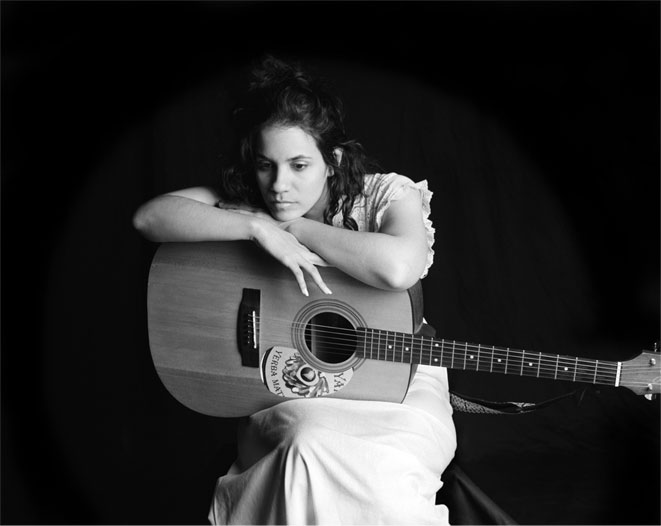
Nehedar's music is catchy quirky anti-folk, but is it Jewish? And does it matter?

Nehedar, aka Emilia Cataldo, is an up-and-coming singer songwriter in the NYC area but not my usual blog post focus. While a fine musician and an observant Jew, her writing and stage persona isn’t obviously or easily categorized as Jewish. But Cataldo’s experience of becoming Orthodox and navigating pressures from the Jewish community (Orthodox, liberal, and secular) is well worth sharing and provides a lot of insight into the difficulties of being a Jewish musician in America.

Nehedar, which means means “wonderful” in Hebrew, writes quirky anti-folk music that puts a strong voice and guitar lead over rock, electronica, punk, and latin music instruments and rhythms.  On her new album, High Tide, results vary from delicate observational moments (Tinkerbell) to anthemic anarchist screeds (Count Down The Days Til You’re Dead). I dig Nehedar but wish she’d dig a bit deeper into her lyrical material.  I kept wanting to compare her to the disarming personal observations of Tori Amos and Amiee Mann, or the cynical world weariness of Firewater or the Pogues.  Her lyrics, though, are a bit too shielded and externally focused. That makes them come across a bit superficial.

Here are the tracks from High Tide. Check 'em out and see what you think. Definitely worth a listen.  For more info on Nehedar and High Tide, check out her website.


As Nehedar and I were emailing back and forth I decided a more formal interview might be a good way to get share her story and she graciously obliged.

Teruah: This is a Jewish music blog so we’ll talk both music and religion, but let’s talk music first. You’ve been active in the NYC singer songerwriter scene for a while and have got a new CD “High Tide” out. In your Pens Eye View interview you were asked about your style and said “I play with genre so much that it is pretty hard to define (my sound). Anything from electronic, punk, folk, rock, and then I’ll throw in Latin beats. Then my tonal approach will vary from sarcastic to dead serious.” From my listen to the HIgh Tide, that sounds right on. I think, though, it's fair to say that the songs on High Tide are very voice and lyric centered and give the audience the experience of listening to you singing to directly to someone standing just a bit offstage. Lots of “you” in the lyrics. So, who are you singing to?

Nehedar: The you’s on this record are everything from me, to the listener, a lover, a robot, society in general, hashem.. fantasy characters...

Teruah: There’s mix of instruments across the tracks, which range from voice and strummy guitar to rock arrangements to heavy electronica. What are you playing yourself and are the other instruments your regular band or are they friends borrowed for the album? How does this compare to your live show?

Nehedar: I play most of the guitars and electronic keyboard riffs, I have preferences for certain basslines that I write. I work with producer Craig Levy (Little Pioneer) in his Brooklyn studio. He also plays bass and drums and some guitars and keys. The band is a separate entity. Only a few songs in my past 5 albums had actual live band members on the recording, but none on this album. The trumpet on "Take It Apart" is the amazing Mike Shobe who is in the band on Louis C.K's show. He's fantastic and his solos make me very very happy, but he's a session player and if I perform this song live, it will be with my friend Dan Wagner of the Long Island band "Penguin Revolution."

Teruah: The reviews I’ve seen of High Tide (Brooklyn Rocks, LyricLounce, Jamsphere, PensEyeView) were pretty positive, but what’s up with that Heeb magazine post? Chicky (from HipsterJew) had some snarky fun busting on your song “The Song No One Hears.” Honestly, I have little use for Heeb magazine, their music writing in particular, but even for them that was petty. Did you see that one coming?

Nehedar: I don't think he knew what he was doing. I'm fairly certain that he was assigned a comedy hit piece. I actually acquiesced to be "made fun of" in order to get some coverage in Heeb, but I assumed that it would be by someone who is familiar with writing about music. It was totally my fault for assuming that. That writer didn't even hurt my feelings because he was so dumbly dismissive. If he had actually analyzed my work (at all!) and found it lacking then I would care more. It's so important to remember not to care what any critic says though! I hope I can get to that point, whether it's a compliment or an insult, to remember their only purpose is to help you spread the word. The fact is that I got a lot more positive attention via the comments in that piece. At the end of the day Chicky was more insulted by that whole fiasco than I was.

Teruah: When we started emailing, you mentioned that you’re a shomer shabbas Jew and that you got your start playing gigs with Jewish themed music groups Pharoah’s Daughter and Jake Marmer's Mima'amakim. How did that hookup happen?

Nehedar: Jake Marmer was a friend and Mi'ma'amakim was an alternative poetry journal that he started. They had great launch events where their writers would read their poetry and there would be fantastic music: Pharoah's Daughter, Raquy & the Cavemen, Pitom, Jon Madoff, that sort of thing. I guess he just saw something in me that made him want to put me on the stage!

Teruah: One thing that gets debated is how much there is, outside of the Orthodox / Chassidic community, a Jewish music scene. What do you think? Were you playing in a Jewish music scene? What about now?

Nehedar: To me, there is very much of a Jewish music scene, but I'm not sure about the distinction of religious vs. secular. I think it's more of a matter of affiliation and friendships. Some of the most religious people are in the least religious seeming bands and vice versa but I won't name names!

My first couple of shows were with Mi'ma'amakim and then I got my stage legs steady by performing at a weekly event called Hasids meets Hipsters where the amazing Sway Machinery were regulars. My band members have all been Jewish (except my dad!), and many went on to form their own bands (Glaser Drive, Stolen Brown Evergreen) We used to play shows together for years...

I've produced shows in NYC with Rav Shmuel, Y-Love, Aliza Hava, BlanketStatementStein (Back from the UK), Mick Lewis & the Fine Print, and played at shows with Sarah Aroeste, Chana Rothman, Jezzy & the Belles, and on and on. I had a good friend and roommate in college from Moshav Modi'im (the Carlebach yeshuv) I got to know all sorts of young Jewish musicians, some of whom are still active. When I first started playing live, I had the amazing Hayyim Danzig of Blue Fringe as my bassist, and this was at the peak of their popularity - he's on a couple of tracks on my first album! So yes, I think there is a scene in NYC at least, it might need a little watering now, but it's got strong roots!

Teruah: How’s it been juggling the pressures of being a gigging musician while also being an observant Jew? Are your fans aware of this? Has it created any positive or negative expectations you’ve had to deal with?

Nehedar: It's really hard. Really. I think the hardest part for me is that, there is very little opportunity to get bigger using the mainstream networks that are in place (festivals, conferences, events etc) without performing on Friday night. If someone contacts me about performing at their event, that event will usually be on a Friday. I don't really get asked to play at Jewish scene events. I also have limited opportunity to network and support other musicians in the mainstream world (either supporting them onstage or off) because so many important shows are on Shabbat. I end up in a double bind with this situation, I am too religious for the mainstream path, and not religious enough for the Jewish track (also the wrong gender).

Teruah: How about the religious community? Liberal Jews often don’t get the idea of observant Jews who aren’t cloistered inside the ultra-Orthodox / Chassidic world. And that world often doesn’t get how someone could be a Jewish musician who isn’t Torah oriented all the time. And then there are the religious limits including kol isha and sefira to deal with. How do you navigate all this?

Nehedar: Truthfully I don't navigate it well, it's all very awkward. As you can tell I haven't made any kind of peace on this issue. I strive to be good at what I do, and true to what I believe. Kol Isha is bad news. I think it's flat out incorrectly followed and understood. Addressing this is so low on the priorities (or maybe the opposite of the priorities) of anyone with any power in mainstream leadership that I don't think we'll see a change any time soon. I will be writing a guest blog on Jewesses with Attitude this month that addresses this perspective in greater detail. I thank G-d that there are rebbeim like Rabbi Avi Weiss, Rabbi Saul Berman and schools like Drisha and Yeshivat Chovovei Torah here in NYC that look at orthodox Judaism with a progressive lens. I was fortunate to attend Yeshiva University and to have been taken in by a wonderful modern orthodox family in 1999. Without them I would have believed the party line and thought that uttering a sentence like "I'm supposed to nullify my own mind to the torah" actually make me sound AWESOME. My Yeshiva University education provided me with some historical context of our culture's development which helps to put it in perspective. One great class with Rabbi Hidary (I forget his first name) in Yeshiva University taught me so much about the 2nd temple period including the development of the babylonian talmud that I wonder, If people were aware that the lifestyle of the Jews in Bavel was closer to modern orthodox than so called "ultra orthodox," how would that change or improve things? People learn Gemara, they don't tend to learn about the culture in Bavel from a historical perspective.

As a musician, I'm permitted to perform on Sefirah, but I won't plan a big event in NYC during sefirah out of respect for my fams (a term lovingly borrowed from NYC band Fifth Nation).

Teruah: Are you FFB (Frum from birth) or bal teshuva (came to Orthodoxy later in life)? I’m guessing the latter, right?

Nehedar: I came from a biracial nuclear family with no culture other than itself. When I chose to be orthodox, it was mainly because I needed the discipline and guidelines. My parents intentionally raised me without any boundaries or any culture to glean from (other than their counter culture). So I'm surprised, when you ask, how my music is Jewishly relevant, how much I want to have a real answer. I want to say that as a student of Jewish mysticism, I infuse my work with mystic concepts, I want to say that since my social identity is orthodox, I write from A Jewish Perspective, or that when, in a song, I am begging for help or for guidance, that I'm addressing a concept of G-d that is informed by Jewish teachings. But I don't know how much that stuff matters. If Jewish people want to see Jewish culture being very very Jewish, with bagels, lox, klezmer, etc. I will never be that because I don't want to be that. If I tried to do that kind of thing it would be false and I don't intend to spread more false messages in the world.

Teruah: I totally get that. The Jewish world is pretty segmented with each segment having its own set of expectations for music or art that is “Jewish.” In the last week I chatted with an Orthodox musician trying to convince him that Jewish music can be more than music that directly praises God (e.g. another interpretation of the Psalms) and talking with some secular “bagel” Jews who love klezmer bands and Israeli pop bands because, since the musicians are Jewish and the music has a cultural connection, the music makes them feel Jewish without asking them to deal with religion. Situating yourself in all of that is tough, not doubt.

Speaking of Jewish community reaction, in our first email you lamented that the Jewish hipsterati pretty much ignore you. I’m sympathetic, the contradictions of your life as a gigging musician and observant Jew peak my interest and should theirs, but I’d also like to challenge you a bit there. Like most Jewish American musicians, but unlike Pharoah’s Daughter or Jake Marmer, you’ve made the perfectly reasonable choice of not having your Jewish identity be central to your music or stage identity. Why should the Jewish hipsters, who are looking for ways to more publicly navigate their own Jewish identity, connect with you? What do you think they’re missing?

Nehedar: When I referenced "Jewish Hipsterrati" I was speaking more to say, Heeb, and the like who will write a long honest musical review of Yael Meyer (her mainstream identity is no more Jewish than mine), for instance, but will approach a review of my music with utter distain. I don't have illusions that I'm as Jewishly relevant as (the uber Jewish artists I enjoy like) Golem or Sarah Aroeste, but if I were to become successful, you know the mainstream Jewish publications would eat up my story with a spoon.

I guess I just wish that more people were like you, intellectually curious, and open to new things. I don't know if anyone's life is missing the presence of Nehedar music. But they won't know unless they check it out for themself and, personally, I have a lot to say and I'm tired of talking to myself!

Teruah: I get that. I’ve lamented a number of times that there are few magazines or websites that are interested in exploring what it means to make Jewish music or to be a Jewish musician regardless of how those things are defined. Since so much of Jewish life is establishing our Jewish identities in a complex secular and religious world, it’s frustrating that most magazines/websites seem to just pick their default definition, fawn on anything within it and marginalize anything outside it.

And I agree...I hope more folks in the Jewish world check out your music.

Before we wrap up, any additional info you’d like me to pass along? Any upcoming gigs we should know about?

Nehedar: Thank you so much Jack! I'm playing in Milwaukee, Wisconsin at the Circle A Cafe on Sunday July 22 at 9PM. I'll be accompanied by my dad on Saxophone and will be dressed in costume and shooting a music video that night with the audience!

Wednesday, July 11, 2012

Rita's Persian Album

As I've mentioned, I have hard time tracking Israeli music. So I routinely run into musicians that are described as "the most famous" in Israel, only to say...who? That happened again this week when I ran across the music of Rita whom, according to wikipedia, "is an Iranian-born Israeli pop singer and actress, notable for being the most famous female singer in Israel." Typically, I wouldn't bite on this sort of thing. Israeli pop is still pop and I usually don't find it that interesting. But Rita's new album "My Joys" is fascinating and, well, awesome. Like Ofra Haza's wonderful Yemeni music recordings, "My Joys" revisits Rita's native Persian language and the folk music her youth...both in a contemporary pop context. The album wen't gold in Israel and this video shows why....
Shah Doomad (Live From Tel Aviv 2012) - Rita


Rita's toured the US before, but not recently. I hope she comes around again soon.

Saturday, March 3, 2012

We are all Constellations. The latest from Mikey Pauker

Earlier this week I blogged about NuRootz musician Alison Westerman. Today I've got the latest video from her fellow NuRootz collective musician Mikey Pauker. I got a chance to see Pauker perform at the URJ Biennial and was impressed. He's part of a really select club of people that includes Matisyahu, Y-love, the Moshav band that are equally comfortable in religious Jewish settings and in very secular rock club settings and doesn't change his set list much between the two.

Here's his latest video, Constellations. It's not one of his more explicitly Jewish pieces, but I dig it.

Pauker's a California guy, but is current living and attending a Yeshiva in Nahalot, Israel and soaking it all in. Here's an excerpt from his blog
"I have fully immersed myself in a super natural, complex, beautiful, mystical culture filled with life!!! I have been living in Nahloat which is a Silverlake/East Village/ Mission District type of community in Jerusalem. The people here are artists/hippies the create sort from all over the world. This is a spiritual community right across from the Shuk which is an open market similar to what you see in movies where people bargain for fresh produce, like in the Disney classic Aladin. Every day I eat fresh barakas, produce, and drink fresh juice. I am still keeping up with my daily yoga and meditation. During the week days I wake up early head to the yeshiva to study Tania. From Tania, I walk over to the Mikveh, (a spiritual bath house), where I cleanse my soul and physical body. From there I walk up stairs where I pray and wrap tefilin on my body. Every morning I pray during the entire Shachrit morning service and then I continue with Shemona Esrei. On the days they have torah service I am finally able to follow along with the hebrew text without using any vowels. I am able to understand the prayers and the intentions behind all of them. Every morning I am able to get VERY present with the universe through morning prayer and I am falling in love with this practice."
Wish I was there buddy. Seriously.

To get more info on Pauker's recordings, tours, and his spiritual adventures in Israel, check out his website.

Thursday, September 8, 2011

The Groggers. Holding a fun-house mirror to Orthodox Jewish life.

To paraphrase one of my favorite rock critics, (Paul Williams "Rock and Roll The 100 Best Singles"), there are two primal rock and roll traditions.... angry stupidity and cheerful stupidity. But there's a counter tradition too, smart stupidity. The court jester. The smart guy (or gal) playing dumb. Sometimes with snarky bite, like Jello Biafra and the Dead Kennedys. Sometimes with nerdy-bafflement, like They Might be Giants. But always that sense that you'd better press rewind and listen to that one again. They just said something that needs to be heard.

The first time I heard The Groggers, I didn't press rewind. The song was Get, and the band bumbled along with a power-pop finger shake at a guy who didn't deserve his girl. A well-played Orthodox novelty song, but (to my ears at the time) nothing more. I wasn't hooked yet. But tonight they sent me their new video "Upper West Side" and they got me. Court Jester. Smart Stupidity. Press Rewind.

Check it out

"Upper West Side Story" - The Groggers


Under the wide eyed naivete of singer/songwriter L.E. Staiman's vocals, is some sharp satirical bite. The phrase "I want to live on the Upper West Side where the girls always stay 29, accountants by day, speed daters by night" was delivered deadpan, but dead on the mark. (As are the hysterical West Side Story "be cool" finger snaps in the video.)

Ok, now go listen to the even better Groggers ballad "Eishes Chayil." I winced when I saw the title. Eishes Chayil, the Woman of Valor, is a regular motif in Orthodox pop music. Derived from a (sometimes touching, often awkward) Shabbat ritual, the Eishes Chayil pop song is usually over-earnest and condescending in it's celebration of the vague awesomeness of the Jewish woman. (Here's Orthodox crooner Yaakov Shwerky singing a representative example.) The Groggers skewer it beautifully. Staiman's version pushes the vague detachment of the Eishes Chayil concept as far as it will go... straight into a Weird Al Yankovic-style voyeuristic creep-fest. "If you ever need me... I'll be right out your window."

In a post on Frum Satire that went up this morning, Heshy Fried lauded them for being a Jewish band that didn't spend their time singing about religious topics, but instead sang about (Orthodox) Jewish life. That's true, and Fried's right that the Orthodox community needs more bands like that. But I think that misses the point a bit. The Groggers aren't singing about frum life, they're holding up a fun-house mirror to it.

Under their dumb lyrics are a smart insiders critique of Orthodox life. And that's brave thing to do. Smart stupidity. Court Jester. Rock and roll.

Update: I forgot to mention that The Groggers debut album "There is no I in Cherem" dropped in August. Go get it.

Tuesday, August 23, 2011

Izabo's Summer Shade

This is my summer for Israeli music. Israeli bands are pushing hard to get traction in the American market. I've skyped with Israel's Oleh! Records, found out that Israeli bands took SXSW by storm, and exchanged email and tweets with Israeli bands and promoters asking me to blog about them. That's new for me but I'm game. There's a lot of great music coming out of Israel and I'm happy pass it along.

Today's find is the Israeli band Izabo. Here's their official blurb....
"Best described as a “brilliant, action packed combination of Psychedelic Rock, Disco, Punk and Arabic spices,” these psychedelic rockers secured a spot as one of Israel’s most successful alternative pop bands with the 2003 release of their debut album “The Fun Makers.”
To me they fit in the same 'Israeli beach party' orbit with my fav's Boom Pam and Electra and their new video, Summer Shade, is a perfect summer track..buzzy and languid at the same time. Like Electra Izabo sings in only lightly accented English, making it an easy listen for an American audience. In fact, the light accent and the lightly Mizrachi flavored tunes lends Izabo a perfect sense of friendly exotica.

C'mon. Even the ice cream cones have bushy mustachio's. How much more friendly does it get?


Right now, Izabo is running a giveaway on their facebook site. "Like" them and get Summer Shade and two other tracks for free download.

Tuesday, July 26, 2011

Oleh! Records... Israeli Music Export

Keeping track of Israeli music is much harder than you'd think. Outside of the occasional reviews in Haaretz, Israel National News, JTA, and the Forward, there are few English language websites that provide any regular coverage of the Israeli scene. The only specifically Israeli music focused sites I know of are the online catalog Israel-Music.com and Ben Bresky's excellent Isreal Beat podcast. Until now, that is.

Jumping in to help fill the void is Oleh! Records, "Israel's Music Export Office." Oleh! is not a fannish gossip, releases, and reviews sort of site (though we really need one). Oleh! focused on the business of music and helping promoters and venues outside of Israel make connection, book, and promote Israeli musicians. Wearing my other kippah as (current) co-chair for the Detroit JCC's Stephen Gottlieb Music Festival I'm going to be getting in touch with these folks.

But to the average fan, Oleh! is still a goldmine. Yes it has information about Israeli superstars including Noa, Dana International, David Broza, and the Idan Raichel Project. But did you know that Israel has 7 excellent heavy metal bands? You do now. Oleh! lists Xenolith, Winterhorde, Viscera Trail, Orphaned Land, Midnight Peacocks, Gevolt! and Matricide. Whew. In addition to metal, Oleh! provides information on a range of genres including urban and soul, punk and metal, jazz, middle eastern, instrumental, folk, classical, reggae and funk. While these lists do not capture every band in Israel, it's a fine start for the budding Israeli music fan. I did a quick scan for some of my favorites and found info about Boom Pam, The Teapacks (but not Kobi Oz), Yidcore, Balkan Beat Box, and Hadag Nechash. In bumping around their site I also learned about the Israeli 'psytrance' scene (check out Skazi and Void) and got totally hooked on the "Kasbah Rock" sound of Electra (see below).

In short, where has Oleh! been all my life?

Oleh! just launched recently, so it will be exciting to see what the site matures into over time. For more information, check out the Oleh! website, as well as their Twitter and Facebook pages.

Electra - Coming To Get You! - official video


Update: In the comments Ilan, of the Jaffa Jive radio show, just pointed me to another resource on Israeli music:
"A small addition to the available resources: Audio Montage - a small record label from Tel Aviv (more of a "co-op" label). A hub for some of my favorite musicians.
http://amontage.net/wordpress/
Thanks Ilan!

Saturday, July 23, 2011

End of JDub. What's next for New Jewish Culture

The news broke about a week ago. JDub, the not-for-profit hipster Jewish music, is shutting down. Zeek has more info and an excellent summary of the state of "New Jewish Culture." This is a sad day, without a doubt, but not unexpected. I've heard lots of rumblings about JDub for a while now, they've had money problems, questionable management, maybe a bit overreaching in projects. Sounds like a typical not-for-profit, right? But they'll be missed. They were a focal point for folks like me to point to when trying to get people excited about New Jewish Culture.

But just because the organization is folding up doesn't mean the bands are going away, the fans are going home, or the enthusiasm is diminishing. It's more a question of what kind of organizations are needed and what kinds of business models work. So what comes next? Should someone else try to make a go of a Jewish label? Does the New Jewish Culture scene need record labels? And if so, for what? A&R and advance funding on recording (audio and video)? Public relations & marketing? Band management and tour management? Album distribution?

What about on the fan side? I've been expecting that someone will start a slick and stylish Pitchfork style website with a wide vision of Jewish music. There's finally a decent online radio station in Jewish Rock Radio. But it's pretty narrowly focused. There's an "International Jewish Presenters Association" but it doesn't seem to be particularly active. Shemspeed is still turning out great music, mostly hip-hop. There is, of course, the always active Orthodox & Chassidic scene, but they don't make much effort to reach outside their primary audience. (And, yeah, I'm still doing Teruah).

So what's next? Not sure. But, to paraphrase a recent tweet from the klezmer-punk band Golem....exciting new Jewish music was happening before JDub and it will continue to happen after JDub. But JDub will be missed.

So...here's a quick blast from one of my favorite current JDub groups...Girls in Trouble. I've raved about GiT before and will continue to do so, led by Alicia Jo Rabins, Git is somewhere between the next Regina Spektor and the next Debbie Friedman. And I don't take either comparison lightly. Who's going to help me champion GiT and all the other new Jewish bands out there?

Girls In Trouble - We Are Androgynous

Tuesday, July 5, 2011

Ravid Kahalani's Yemen Blues

The excellent music blog Aspara "genre- and tradition- crossing music from around the world" recently ran a nice piece on Yemen Blues, an Israeli group led by Ravid Kahalani. As Aspara notes, Kahalani mixes "blues blended with Yemenite Jewish chants, West African percussion, funk, and much, much more. Great stuff. Check out the Asapra article for the full story.


You can get more info on Yemen Blues at the usual places including YemenBlues.com, twitter, and their MySpace and Facebook pages. YB is touring North America right now, so check out their gig schedule (this means you NY, Chicago, Calgary and LA).

Tuesday, June 21, 2011

Who are we that dream and what is that dream? Kutiman, Lawrence Dermer, and the perils of making music about Israel

Music about Israel is tricky thing. And I don't mean music from Israel. Israeli musicians can grab a guitar or an oud and have at it with no complications. Just do their thing. But music about Israel is fraught with all the tensions and complexities of Israel itself. If the music is written by a non-Israeli, it also comes with all the tensions and complexities of our Diaspora perceptions. Which ends up with writers like me thinking much to hard (or not hard enough) about what it all means.

Israeli mashup-phenom Kutiman recently released a brand new track called "Thru-Jerusalem." Like his previous collection of "Thru-You" videos, "Thru-Jerusalem" stitching together fragments of found sound and video into something brand new. Unlike T-Y, which featured video clips that Kutiman discovered on YouTube, T-J features video clips that Kutiman shot himself. What was found was the musicians and the moments, which Kutiman discovered walking around Jerusalem. Stitched together by Kutiman, they become a moving sonic landscape of a hopeful multi-cultural city. If you dig it, like I do, the track can be downloaded for free from SoundCloud.

Thru Jerusalem


Lawrence Dermer, an American BMI Award winning & Grammy nominated Songwriter and Producer (and Cantorial Soloist) released "We are Strong" back in 2008. I missed it then, but got pointed to it recently. We Are Strong has an upbeat 'We are the World" kind of 'unity through music' vibe and contemporary world-beat sound. This is an earnest, big anthem stuff. If you dig it, which I don't, you can get the track or album from CD Baby.

We are Strong


Of the two I find Kutiman's "Thru-Jerusalem" the more compelling effort. Partially this reflects my personal taste... I'm not a big fan of Dermer's smooth, radio-friendly anthem sound and wish he'd lose whatever effects processing he's using to obscure his voice, but I love Kutiman's sensibility. Kutiman has a great ear for the texture of sound and makes surprising sound combinations fit together beautifully.

This also reflects my read on the song narratives. Kutiman is an insider. His assemblage of Jerusalem musicians reflects both a realistic portrayal of Jerusalem (these are real Jerusalem musicians, after all) and Kutiman's optimistic vision of Jerusalem (this varied group of musicians blending together into a unified, but not homogenized) whole. From the perspective of a Diaspora Jew who's never been to Israel, it sounds about how I'd hope Jerusalem would sound if I could visit and wander around as Kutiman does. I wonder how real and how constructed that vision is. Is it a better version of reality than news reports show, or a delightful fiction?

Dermer's song on the other hand feels jingoistic. When he sings "We are strong" it's unclear who "we" are. He could mean all Israeli's, but I don't think so. Instead it feels inclusive of Jewish Israeli's with only a passing nod at non-Jewish Israeli's. Where Kutiman's videos showing real musicans of different backgrounds being themselves, explicitly acknowledging the complexity of Israel, Dermer's repetition of vague and banal slogans such as "what we believe we will become" and the constructed reality of him mugging in front of children who sing his song on cue, leaves "We are Strong" feeling strangely out of touch. This doesn't seem to be a song for Israelis, instead it seems like a song to raise spirits of Diaspora Jews? If we're strong, all Israel's problems will just go away.

So who are we that dream and what is that dream? Do we (American Jews) fall behind Dermer's sentimental utopian vision of happy children of all (Jewish?) races singing in unison? What dream do this children really share? Or do we (Israeli Jews and Muslims) accept Kutiman's vision of Israeli adults existing together peacefully in a complex shared space? (Remember that this too is a dream. The collaboration of Kutiman's musician's only happen inside Kutiman's mind and computer...they never actually meet in real life).

Maybe the answer is that either way, all we can do for now is dream.

Wednesday, March 30, 2011

Turetsky's Choir - the Russian Jewish answer to Riverdance

If you want a full on Jewish music pageant, it's hard to beat the Russians. The following video, from the Turetsky Choir, is a great example but only one of many I run across. It's an incongruous (to me) mix of some seriously good male vocalists, Jewish folk and liturgical music, and a high production value stage and pop instrumentation. Much like Riverdance does for Irish music and dance, it at the same celebrates and trivializes Jewish music.

I'd pay big bucks to see it live. And then need to take a shower.

The Turetsky Choir is led by Mikhail Turetsky, who first came to prominence in 1989 in Russia as the choirmaster of the Moscow Choral Synagogue, the main synagogue in Russia. Initially, Turetsky's choir was exclusively an art music project that produced concerts and recordings of primarily Jewish music. Over time, though, it added the flamboyant sets and pop sensibilities it's known for and began to mix Jewish music with pop and musical theater pieces.

And no, I don't know if any of the choir members, including Turetsky, are Jewish or what being Jewish might mean to them. To read the YouTube comments on this video, you'd think they were either treif impostors or best thing since Golda Meir (who, for the record, infuriated the Soviet authorities by visiting the Moscow Choral Synagogue back in 1948). And I'm not sure how much it matters. Seeing a bunch of seriously good male vocalists singing Jewish music to a huge crowd of Russians, in the face of the centuries of discrimination that Russian Jews have faced, does my heart proud.

Sing it loud, guys. Who cares if you know what you're singing. (Though I'm betting you do.)


For more info on the Turetsky Choir, see their website, for their recordings, see Amazon. Amazon doesn't actually stock them, but has them listed. If anyone knows a good source of import Russian recordings let me know. I'd love to pick up a couple.

Update: Score. I picked up one of Turetsky's early recordings at the Moscow Synagogue on eMusic. It's a very good recording of a synagogue male choir. No pop. no fanfare. Great singing. Now I have to track down one of the later recordings.

Sunday, March 27, 2011

For salvation, Kaddish. For redemption, Kaddish. For revolution, Kaddish? Ofra Haza, Twitter, and the Yemeni Revolution

It's rare that Jewish music has international prominence and when it does it's usually because of some dustup over Israel. For a current example, check yesterday's Israeli National News article "Jewish Music Group Rejects Israeli Money After Threat." While an interesting and frustrating article, Jewish music itself plays a small role. The article could just as easily been about a Jewish literary group or student group. Not so this morning.

Today I woke up to a twitter discussion between National Public radio strategist and digital technology community organizer Andy Carvin and Maria Al-Masani, a Canadian public relations agent, model, and former Miss Universe Canada. Al-Masani was telling Carvin, and others, about how Ofra Haza's song Kaddish was becoming the anthem of the current Yemeni revolution. Haza was a popular Israeli singer of a Yemeni-Jewish family who sang pop-Israeli, Yemeni-Jewish, and Yemeni-Arabic music.

Here's the exchange:
Al-Masani Saturday 3/26, 23:09: @acarvin @TomOdell Andy you are jewish? That's wonderful! Have you heard the music of Yemeni-Jewish singer Ofra Haza? http://bit.ly/Ja6MB
Acarvin Saturday 3/26, 23:11: @ was a big fan of hers before she passed away, RIP.

Al-Masani
Saturday 3/26, 23:13: @acarvin same here. :-) Her music in general but especially her song kaddish is played by so many in Yemen as sound track to uprising

Acarvin Saturday 3/26, 23:14: Yemeni Jewish singer Ofra Haza and the revolt. Wow. RT @al_masani: her song Kaddish is played by so many in Yemen as soundtrack to uprising

Al-Masani Saturday 3/26, 23:14: Awesome! @jilliancyork Loving how @acarvin is standing up for Muslims against Twitter hate tonight.

zweever212 Saturday 3/26, 23:22: http://youtu.be/GG0ic19pL2o Israeli singer Ofra Haza's song Kaddish played by many in Yemen as an inspiration for uprising. / @al_masani

Al-Masani Saturday 3/26, 23:26: @zweerver212 to us she is Yemeni. She also sings many songs in traditional Yemeni dialect.

Al-Masani Saturday 3/26, 23:27: @gfry @emilylhauser Ofra Haza is a source of national pride for Yemenis. We have a Yemeni-Jewish population, many are Israeli citizens

zweever212 Saturday 3/26, 23:28: @al_masani well yes, she's a yemeni jew, i've heard her songs in the dialect since im an arabic student. we're all one people.

Al-Masani Saturday 3/26, 23:27: @zweerver212 exactly, Jews, Christians Muslims united against brutal regimes #MENA #Egypt #Yemen #Libya
Ofra Haza singing Kaddish at the Montreux Jazz Festival in 1990*

Haza's Kaddish isn't the liturgical prayer of the same name. But, similarly to Alan Ginsberg's poem Kaddish, picks up on themes from the prayer to create her own secular prayer for peace and redemption. It's a deeply moving song and it's wonderful to think of it being adopted by a people striving for redemption and peace.

The discussion is also fascinating as it shows how labels like Yemeni, Israeli, and Jew are negotiated. Haza fits all those categories, but the commentators, for their purposes, preferred more restricted descriptions. Yemeni. Yemeni-Jew. Israeli. When confronted both were able to step back to the larger label set. The result... the restricted categories turned out to be ways of describing the commentator, not Haza.

Just as a note, I don't have any independent confirmation that what Al-Masani said is true and that Haza's Kaddish is really being played in Yemen right now. If anyone has any additional information, please let me know.

* The video I posted is not the video linked in the twitter discussion, which is more pop and more English language. It's not clear from Al-Masani's tweets what recording is being played right now and the Montreaux recording has always been a favorite of mine.

hat tip to OfraFan for uploading the video.

Monday, March 21, 2011

Stereo Sinai hits Detroit with a new Purim track

Chag Sameach Purim everyone.

This week is going to be a whirl of activity. The Detroit JCC's Stephen Gottlieb Music Fest kicks off on Wednesday. Big events for me include my "Silver Age of American Jewish Music" talk at the Oak Park Michigan JCC on Thursday night (come one come all!) and the Progressive Jewish Music Showcase on Sunday at the West Bloomfield Michigan JCC. The Progressive Jewish Music Fest is a HUGE deal. As far as I'm aware, there's never been a concert like it in Michigan. It's going to feature Y-Love and Diwon's hip hop, Pitom's alt-rock/jazz and my Chicago buddies Stereo Sinai's biblegum pop.

Stereo Sinai just came out with a cool Purim track, supported by my other buddy Alicio Jo Rabins of Golem and Girls in Trouble. Check it out, and, if you're local come see them play. It'll be a great show.

The Esther Song


Here's Stereo Sinai's description....
"It's taken from a moment in the Book of Esther when Esther realizes she can't just sit there and let the world fall apart. In the song's refrain she says, "‎For how can I endure the evil that shall come unto my people? How can I endure destruction? How can I stand back and watch my kindred suffer?"

Of course she can't, none of us can. She stands up to the king, in front of the King. Where we see the world crumbling - be it as big as an earthquake in Japan or as (seemingly) small as a friend who needs a shoulder to cry on - you do what you gotta do. Here's hoping this song will be a call to action, and a call to empathy. May we not stand idly by."
If you're in Michigan or northern Ohio, come see Stereo Sinai on Sunday (March 27).

Friday, March 11, 2011

Kobi Oz "Mizmorei Nevuchim / Psalms For The Perplexed"

Yesterday, while wandering around the Jewish corner of BandCamp.com, I ran into a recent album from Kobi Oz, lead singer of the popular Israeli group Teapacks. As Yehuda Mirsky notes in his essay in Jewish Ideas Daily "Some mainstream Israeli musicians have recently been turning for material to religious texts; others have become immersed in the musical traditions of Sephardi Jewry. The two trends have come together in a new album, Mizmorei Nevukhim ("Psalms for the Perplexed"), by Kobi Oz." My Hebrew isn't good enough to follow the lyrics, which Mirsky describes as "abound[ing] with riffs on the terrors, longings, and sheer nuttiness of Israeli life, plus a whimsically phrased but dead-earnest questioning of dogmas both religious and secular." Fortunately, all the songs are translated courtesy of "Makom - Israeli Engagement Network."

I love the album's sound which is mixes a capsule history of Israeli pops with mizrachi overtones and archive samples. And the lyrics for the song below, Prayer of the Secular" are priceless. Check it out.


You can get more information on and the album, including translations and a video interview, from the album website.

Tuesday, December 28, 2010

Tablet's 100 Best Contemporary, Ashkenazi, American, Pop Jewish Songs Ever.

Last week Tablet writers Jody Rosen and Ari Kelman did us all a great service...they started a good argument. Their piece, "Song of Songs: The 100 Best Jewish Songs Ever," and their follow up "You Questioned Our 100 Greatest Jewish Songs" were entertaining and have let to a lot of grumbling and handwringing. Personally, the list drives me crazy (Amy Winehouse but not Shlomo Carlebach? Seriously?) ...but I thank them for publishing it and anyone who reads this blog should go read the list and listen to as many of the linked tracks and videos as they can. It'll be dizzying but a grand adventure.

Lists like this are doomed from the start because the authors establish a category, Jewish music, but fail to define it's limits. They also define an evaluation "best" without defining the criteria to be used. Are we talking about comparing every song written by a Jew or about a Jewish theme in the whole history of the Jewish people and comparing them based on how much impact they had on the Jewish people's history?

Not hardly. And we should be grateful...such a list would be impossible to create and tedious to read. Instead the list is a myopic contemporary Liberal American Ashkenazi view of Jewish music. And we should be grateful for that for two reasons...

1. It gave them a tractable and entertaining position to write from, a position that matches the cultural background and expectations of a lot of American Jews

2. It exposes the limits and contradictions of that position for a friendly debate.

I, like a lot of the commentators on Tablet's website, am frustrated by how it ignores Sephardic and Mizrachi music, how it seems unaware of contemporary Israeli music, Orthodox and Chassidic music, Jewish art music, and how it glorifies secular pop songs written by Jews. These are real deficiencies that make the list worthless as a definitive catalog of the greatest Jewish music. But as part of our perennial Jewish 'who are we' discussion, this list lays down a well thought through and wonderfully idiosyncratic position. It's now up to folks (including me) who don't accept that position to produce something "better."

I'm not going to attempt that in one shot, but will point a few critical moments in Jewish music that the authors overlook. These moments are just as open for critisism and debate as the Tablet list, so have at it...

1. Giacomo Meyerbeer's Robert le diable. Meyerbeer was a superstar German Jewish opera composer. At his prime in the 1840's and 1850's, he was king of European opera. In an age where Jewish composers often converted to Christianity, he remained a Jew and wrote Jewish liturgical music. While he never wrote an opera that was explicitly Jewish, one of his innovations was the treatment of religious themes, including religious tolerance, on the opera stage. He's also known for his most famous student, Richard Wagner, who after Meyerbeer's death became both an opera superstar and a vicious anti-semite. After Meyerbeer's death Wagner authored Das Judenthum in der Musik (Judaism in Music), which took swipes at both Meyerbeer and Felix Mendelssohn, asking the question... if Jews are such great musicians why don't they have a national music of their own. (Wagner's answer...they're incapable of producing it. They just want to steal and corrupt everyone else's music).

Giacomo Meyerbeer - Robert le Diable - "Idole de ma vie" (Joan Sutherland)


2. Joel Engel. In the early 20th century, Russia experienced a rise in ethnic nationalism supported tentatively by the Soviets...Jewish nationalism included. Joel Engel, along with others conducted ethnographic field trips into the Pale of Settlement and used the Jewish folk music they found there to write art music. Engel, himself, was hugely influential as a writer, organizer of the St. Petersburg Jewish Folk Music Society's first concert, and composer. His most famous piece was the incidental music to the Ansky's play, The Dybbuk.

3. Shlomo Carlebach. Carlebach mixed Orthodox yeshiva training with a Chassidic sensibility and drive toward personal and musical outreach. Considered by many to be the greatest Jewish songwriter of the 20th century, Carlebach created a huge body of folk-liturgical music that continues to have a significant impact on both traditional and liberal Jewish practice.

Shlomo Carlebach Boi B'Shalom 1973


4. Diaspora Yeshiva Band. There was a moment when it all came together...the nascent ba'al teshuva momement and Orthodox camp music, Israeli kibbutzim and yeshivot, American & British rock and roll, and Carlebach's niggunim and outreach. The result was the Diaspora Yeshiva Band and the birth of Jewish rock and roll. While the DYB weren't the only band of that moment, they cast the largest shadow and still have a continuing influence over Jewish rock to this day.

Trailer for the new DVD "Diaspora Yeshiva Band: Live on Mt. Sinai (1982)"


Whew. I wish I had more time right now. Just listing these 4, makes me feel guilty for the 100 or so I'm leaving out.

Wednesday, December 8, 2010

We Miss You John. (Imagine in Yiddish)

I'm still catching up on my Hanukkah posts but had to take a quick time out. Today's the 30th anniversary of the death of John Lennon. Like pretty much everyone else, Lennon's music has been part of the backdrop of my world. If you actually need evidence his impact and how much he's missed, here's his signature song, Imagine sung in Yiddish at a meeting of a group of (what appear to be) Sephardic Ladino speaking Jews.


The YouTube video contents only credit the performer as Frida and the translator as Moshe. Thanks to both them. This made my morning.

hat tip to YouTube user ironmaik22 for the posting the video.

Thursday, December 2, 2010

Hanukkah Day 2: Matisyahu's Miracle on Ice

I'm about to head over to my little wigglers elementary school to talk about Hanukkah to their kindergarten and 3rd grade classes. Should be a hoot. Last time I did this, my wife came too and got a room full of first graders to pound their desks yodeling "sufganiyot! sufganiyot! sufganiyot!" (as we were, of course, handing out sufganiyot).

For my Hanukkah day 2 pick, here's a video my wife and older wiggler were enjoying this morning. It's Matisyahu, showing that he can go head to head with Lipa Schmeltzer for awesome over-the-top Hanukkah silliness. Here's the official blurb. (I love blurbs).
"An uplifting pop gem arriving just in time for the holiday, "Miracle," produced by Dr. Luke protégé Kool Kojak (Flo Rida, Katy Perry, Ke$ha), is drenched in a joyful spirit and features chiming synths, bouncing beats and an irresistible chorus.

Matisyahu says, "There are so many Christmas songs out there. I wanted to give the Jewish kids something to be proud of. We've got Adam Sandler's song, which is hilarious, but I wanted to try to get across some of the depth and spirituality inherent in the holiday in a fun, celebratory song. My boy Kojak was in town so at the last minute we went into the studio in the spirit of miracles and underdogs and this is what we came up with. Happy Hannukah!"
Here we go then....

Miracle: Matisyahu on Ice


Sigh. If you click through to the video page at YouTube scroll down through the comments you'll see a lot of cranky antisemitic and anti-Israeli diatribes. Hanukkah is, in part, about the need to stand up for the right to believe as you choose. It's sad to see how current that need still is.

Oh...and it's worth pointing out that you can buy a copy of the Miracle track and pre-order Matisyahu's new album & DVD set "Live at Stubbs II" at his website. If you're on the East Coast, you can also check out his Festival of Lights tour schedule.

Friday, November 12, 2010

Kol Achai at Shea Stadium. Spoiler Alert...The Cubs Lost

Everyone once in a while I think I've got this Jewish music thing, and then the rug get's pulled out from under me again. My buddy Noah did that to me when he introduced me to a strand of Orthodox pop music that I didn't know anything about. It includes bands like Kol Achai, Abie Rotenberg & D'veykus. Let me start by saying I'm practically clueless about these bands and will be trying to piece it together over the next few months. What I know is that these bands were primarily active in the 80's, played a lot of NCSY camp events, and had a very (for the time) contemporary pop sound. They're connected, I think, with the Israeli scene that produced seminal Jewish rock pioneers Diaspora Yeshiva band and their repertoire includes Israeli tunes as well as original. But I'm really not sure about any of this yet. These bands have little presence on the web other than discographies on some of the Orthodox Jewish music catalog sites. What I do know is that I'm a fan. They're some great material in these discs and they're a pointer to a part of Orthodox Jewish culture that I was completely unaware of.

As I said there's precious little material on these bands on the web, but here's a great clip. It's Kol Achai singing The Star Spangled Banner at Shea Stadium on Sept 13, 1993. Spoiler alert...the Cubs lost.


Hopefully I'll be back with more info on this scene. If you were part of it, as a musician or audience, please get in touch with me.

Update: I just got an email from Avraham Rosenblum of the Diaspora Yeshiva Band. He pointed out that while he respected mainstream Orthodox groups like Kol Achai and "Abie Rottenberg's soulful tunes" that DYB was part of a very different ba'al teshuva scene that "The Megama Duo, Piamenta, Yitzhak Attias, The Baal Shemtov Band and Rava Mehemna were our contemporaries- all returnees to Torah observance. " I really appreciate Avraham's update. For someone who wasn't there piecing this together is tough. By the way...I should note that DYB just released an awesome DVD of one of their 1982 concerts. It's great.

Tuesday, September 28, 2010

Shana Tova, Amazing Grace, and Adi Cohen

Apropos of yesterday's post about Jewish gospel, this video surfaced this morning on one of my mailing lists. It's Israeli vocalist Adi Cohen singing the song Shana Tova to the tune of the gospel classic Amazing Grace.