Showing posts with label electronic. Show all posts

Tuesday, July 3, 2012

Zion Unit Jerusalem Sound System

Israeli DJ Zion Unit makes trip hop soundscapes I want to live inside. Press play on Jericho.
"ZION UNIT is an art ensemble originally from Reunion Island and based in France, UK and Israël. His musical work is an exotic and disorder opera kitsch, intimate, baroque, tinted soul, funk, trip hop, moods filmesques, colors and ethnic psychedelics."

For more info, check out Zion Unit's Facebook, Reverbnation, and Soundcloud pages.

Tuesday, March 6, 2012

Hadar & The Neo-Zionist Avante Garde

I always get excited to see a new Jewish music project coming out of the punk community and was doubly thrilled to see it coming from the Midwest, far from the Jewish music mecca that is NYC. In particular, it's great seeing a Jewish punk / industrial projecting coming from Chicago, home of Wax Trax! Records, one the seminal industrial music labels.
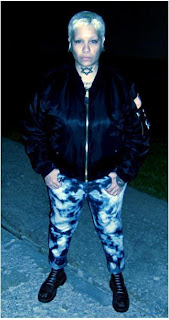
Naamah Bat-SarahThe project Hadar, by musician Naamah Bat-Sarah, is a "Jewish Zionist themed avant-garde musical project" that combines "Ambient, Neoclassical, Experimental/Post-Industrial, Neofolk, and Acoustic/Electronic styles." Hadar's free-for-download album "Khanike" alternates between drones and drums, militant dissonance and open dreamscapes. As Bat-Sarah notes below, Khanike expresses the"real moods and emotions in the ancient Khanike story, on what it must have been like for the Jews at the time of the Maccabean Revolts and re-dedication of the Temple (albeit with modernized soundscapes)." There is a deep brooding and feeling of loneliness to the music. There is also a slow developing sense of foreboding, but the slow development and the limited set of tones becomes burdensome by the seventh track / seventh day. While the eight track / eight day is sufficiently varied from the previous tracks, and in many ways more engaging that the previous days, it doesn't feel like the resolution I was looking for. I would have loved to hear Hadar push further in exploring the emotional and sonic landscape.

Be that as it may, Khanike is a solid piece, and one that's gone into heavy rotation lately. I'm looking forward to listening Hadar's new full album Mishmaat, which is available through Amazon. There's also an earlier Hadar single, "Terrorist Hunters Local 36" available through iTunes. THL36, which I have cranked right now, is a true Wax Trax! style industrial noise fest. Awesome.


To provide some contrast, here's Hadar's remix of the Na Nach techno classic "Rebbe Nachman." Chopped & Screwed indeed. Bring it on.


I had a chance to do a 'email interview' with Naamah Bat-Sarah about Hadar. First, to sent some context here's Bat-Sarah's artistic statement about Hadar.
"Hadar literally means "To Honor" or "Glory/Splendor" in Hebrew. The concept of Hadar -- pride in and knowledge of Jewish tradition, faith, culture, land, history, strength, pain and peoplehood. Hadar is the need to have pride in Judaism and not allow it to be disgraced and defiled by beating and desecration of Jewish honor. This is the concept that the great Jewish leader Zev Jabotinsky attempted to instill in the oppressed and degraded masses of Eastern Europe 70 years ago. The anti-Semite's hatred and contempt of the Jew is an attempt to degrade us. It is an attempt to instill within the Jew a feeling of inferiority. It is an attempt that, all too often, succeeds in promoting Jewish self-hatred and shame in an attempt to escape one's Jewishness. Hadar is pride. Hadar is self-respect. Hadar is dignity in being a Jew."
Teruah: According to your self-description, you think of yourself as "a Jewish Zionist themed avant-garde musical project" and you name-check Zev Jabotinsky as an influence. I am familiar with music across the Jewish spectrum, but I don't run into that set of influences very often. Daniel Kahn's music, "Six Million Germans" in particular, mines similar territory of strong Jewish action, but as a Yiddish social-anarchist he's the opposite of a Jabotinsky Zionist. I was hoping you could tell me more about this. How did you come to this particular set of influences and where do you see it taking you as a musician? Do you see yourself as having clear peers in the Jewish music community or are you out on your own?

Bat-Sarah: As for how I came to the set of influences, you're basically asking me to describe my entire life experience, because that what has shaped my musical as well as political worldview, but I will try to shorten my answer considerably. I have been playing music since I was a child and most of my musical background is in underground Punk Rock & Post-punk genres such as Industrial & Noise, with a heavy influence from reggae, esp. Skinhead Reggae, 70s-80s Dub & Dancehall. My "militant" attitude probably comes in part from my background as a Skinhead (the non-racist kind, obviously). We tend not to shy away from conflict.

Socially, I was raised completely secular with a non-observant Reform Jewish mother and an Agnostic African-American father. I identified as a Jew throughout my childhood, and often dealt with Antisemitism in public school, but I had absolutely no knowledge of Halakha. I have always been pro-Israel since childhood as well, and in my adult life, my outspoken Zionist viewpoint ended me up in contact with more traditional Jews, which inspired me to study my Judaism deeper. I didn't start being more Jewishly observant (keeping Shabbat, kashrut, etc.) until I was an adult, around age 26. I will be 31 soon.

Politically, I lean to the right, falling into what one might call "Neolibertarian" for American politics and, in regards to Israel, what might be labeled as either "Neo-Zionist" or "Revisionist Zionist". I have been in many physical altercations over "The Jews and Israel, so I guess that makes my outlook fit the definition of "militant". I have been seriously researching Jewish history & esp. it's relationship to modern Zionism since sometime after high-school, reading the Torah & Jewish history books along with works by Jewish thinkers/leaders such as Jabotinsky, Herzl, Stern, Kahane and others. I'm not saying I agree with every single opinion/suggestion expressed by said leaders, but overall, I strongly support their message.

Concerning where it takes me as a musician, from the "success" perspective, I'm not making any money and I am certain that expressing this unpopular viewpoint will never make me into a big-time rich rock star, but I sometimes one needs to do what they feel is right as opposed to what is popular. I look at it like this: If I stay broke, I stay broke, but at least I didn't compromise my ethics, and every mitzvah I do creates a thread of light in the Olam Haba (the world to come).
Sonically, I do believe it takes me in more interesting musical directions, however.

In regards to peers, I would not say anyone else is even remotely doing what I'm trying to do sonically, but conceptually, I think there are other avant-garde and underground Jewish artists such as Barzel (NY Zionist noise project who will be on a split/collaborative CD with Hadar in the near future), John Zorn, Black Shabbis, Moshiach Oi!, etc. who are taking modern Jewish music in several powerful directions.

Teruah: It's interesting that the album you put up on ReverbNation is titled Khanike, the Yiddish term for Chanukkah and your songs are titled after the nights of Khanike. It's pretty easy to understand why someone who is influenced by a strong Jewish self-defense leader like Jabotinsky would find Khanike an important moment in Jewish history and on the Jewish calendar, but listening to the tracks I'm not sure I hear the connection you're making. I get a variety of textures from a strident militarism to an open dreaminess but none of the usual musical textures I associate with Khanike music. There was no feeling of celebration or devotion. What were you going for?

Bat-Sarah: The feeling being expressed in "Khanike" the album is not focused on modern celebration of the holiday, but on the real moods and emotions in the ancient Khanike story, on what it must have been like for the Jews at the time of the Maccabean Revolts and re-dedication of the Temple (albeit with modernized soundscapes). Keep in mind, that the miracle of the oil that took place in the Beit HaMikdash was only understood after the fact. Now we know how long the oil was to last, but at the time, all those Jews had was faith in the idea that our Temple would be able to be cleansed and our rituals could begin there once again. The Jews back then would not have been having a festive dinner party like we do today for Khanike (not to say anything against festive dinner parties!)
The sound & atmosphere is meant to invoke a thoughtful "night-time" feeling, with a mixture of militancy, hope and pensiveness....Kindling the lights of dedication while surrounded by darkness, hatred and uncertainty.

Teruah: I'm very interested in the varying niche's that self-identified Jewish musicians establish for themselves. I get from your FaceBook and ReverbNation pages that you're Chicago based and have played, or are about to play, some concerts locally. How as your reception been so far? What parts of the Jewish community have expressed interest in this project? I sometimes help find artists for Jewish organizations in Michigan so this is practical question as well as one of general interest. At what kind of venues are you looking to play?

Bat-Sarah: Thus far I have only done one private house show as Hadar, but in a week or so (march 18, 2012) I will be performing for "Jewish Chicago's Got Talent" which is a program that helps decide performers for the Greater Chicagoland Jewish Festival. I have no idea who the judges are or how they will react to my weird music, seeing as the other acts on the bill appear to be either traditional Klezmer or Klezmer-pop. I have gotten a few donations from nice people at my synagogue to help buy votes (it is Chicago, after all), and a couple pals online helping to promote it. Hopefully I can get onto the Festival(!).

So far, primarily what some people might call politically (if not so much religiously) "right-wing" Jews have expressed interest, but I did get a very positive review in Culture Is Not Your Friend!, an Israeli webzine, which seems to lean left a bit.

Interestingly enough, even though I am a Masorti/Conservative-affiliated woman who is heavily tattooed and do not live anywhere near an Eruv, I get a good amount of more conservative Modern Orthodox as well as Lubavitcher fans, which could partially stem from Chabad-affiliated Rabbi Nachum Shifren appearing on the Hadar track "The Essential War". Extremely frum / Haredi people of course are not likely to be a big "market" due to it being largely electronic music which sometimes features a woman singing. Thus far, I have had hardly any Reform support, but this show coming up is at a Reform temple (Temple Beth Israel in Skokie), so maybe that will change? I am looking, naturally, to play Jewish venues such as JCCs & synagogues, but I will accept any type of traditional "music venues" so long as they do not have strippers, pornography, "Palestinian" flags on the walls, pork grilling next to the stage or some similar assur gross-out factor.

I'd love to be able to afford to go to Israel, not only to play, of course, but to experience The Land. I have several friends in Israel, mainly skinheads & people in punk / underground bands, who I'd like to meet in person too.

Teruah: It's not clear from the FB and RN pages, but what kind of performances are you putting on? Do you have a full band? Or is this more of an individual musician show? RN listed a few live videos, but they'd been taken down from YouTube. Are they still available?

Bat-Sarah: A Hadar performance typically will consist of me singing & playing electric (sometimes acoustic) guitar on top of my programmed music. The 2 live videos are no longer online at this time, but I may post more soon if I get good footage from the March 18 show.
I am trying to get a video or DVD projector to project video loops that I make onto venue walls, as I did years ago in my secular ambient/martial music, but those things are so expensive nowadays!

Teruah: Now that Khanike's out, what's next for Hadar?

Bat-Sarah: Well, the album full-length "Mishmaat" is available at Amazon on CD & Mp3: http://amzn.to/mishmaatcd

I have other music already recorded for my next album "Roots & Branches", some of which can be heard on the Hadar Youtube channel (http://www.youtube.com/user/hadarmusic18) but it's not complete yet.

I hope to get more live events this summer both with Hadar and my (secular) street rock band Bleach Battalion. I have also been throwing around ideas with a local NCSY kid who is interested in starting a Religious Zionist hardcore punk band...this is still in idea stage though. In the meantime, I daven, record music, try to sell it and try to do kiruv when I can. Purim is coming up as well as the Jewish Festival event, and then..Pesach, Lag B'omer, Shavuot, and so on....

Sunday, March 7, 2010

2 from Shemspeed: Darshan and Dreams in Static

When I stand in front of people, virtually or physically, and tell them that we're in a silver age of Jewish music, exhibit A is often the Jewish hipster record labels Shemspeed and JDub. Labels successfully packaging Jewish music, approached from both religious and cultural perspectives, for hip 20-somethings? If that's not evidence that something fabulous is happening, I'm not sure what would be. So I look forward to every new release from these labels and am always happily surprised and challenged by them. These two albums, though, don't quite live up to my expectations.

Darshan's Lishma EP album coverThe first album, Darshan's "Lishma EP" has taken me a month or so of listening to get into it, but I'm getting there. Here's their official blurb...
Darshan is "astral rap, liturgical jazz, audio alchemy. Harmonizing Hebrew chant with hiphop, folk rock with electro-pop, love poetry with kabbalistic psychology, Darshan is a unique and organic weave of world wisdom traditions and modern musical styles"
Darshan is a project of one of my favorite new vocalists, Shir Yaakov, and rapper & producer Eprhyme. Driven by Shir Yaakov's liturgical melodies and slow slow slow delivery and built on Ephrhyme's equally slow, staticky productions, this album sounds in many ways more like an Aphex Twin electronica album than it does hip-hop. I'm not sure that it works. There's a riskiness; a certain urban dreaminess to it that I can appreciate, but also a certain grinding tedium I can't. I'm told by folks that have seen them that their live show is outstanding. I can believe it. The raw material in these tracks is great. I could see Yotzer Or, my favorite track on the album, shaking the house. I can imagine the interplay between Shir Yaakov's melodic vocals and Ephryme staccato rap. The EP, though, seems held back by the lack of stage energy.

Why imagine it? Here's Darshan performing Yotzer Or at their album release party a couple of weeks ago.


Good stuff. But for me the EP doesn't quite live up to it.

Similarly, the second new Shemspeed release, Dreams in Static, draws on a large sonic palette, but the resulting picture is a bit blotchy. According to the official blurb,
"Dreams in Static conjures up the aesthetic of James Bond, Prefuse 73, & Pulp Fiction. Each song is the soundtrack to a film in a genre of its own. This is music that exists beyond pop and yet overflows with it. Serene Poetic strikes a balance between Diwon, a Brooklyn-based hip-hop producer, and Dugans, a multifaceted guitarist-composer from Texas. Using live drums, samplers, analog synths, electric pianos and guitars, Dreams in Static transcends genres and breathes new life and depth with each subsequent listen. The album teems with life, beauty and depth; it's an instrumental masterpiece that resurrects live instrumental music and guitar-based symphonies. It pops in a world where popular music has been left in a state of static."
Ok. Whew. That's a lot to cram into an album. And the album feels a bit crammed into. I'm an electronica fan from way back and can be really happy with broad-brush sonic adventures like this. At its best, this recording is happily deconstructive, breaking down pop genres into bits and reassembling them into long tone poems. My favorite tracks, including American Pastoral and Standing in Shadow live up to hype. They have a rich internal life that gets me immediately invested. Many of the tracks, though, sound more like demo reels than a movie soundtracks. Sounds flicker and weave, but never resolve into anything. I really dug this album when I first listened, but over repeated listening it didn't wear well. Your mileage may vary...check Dreams in Static out on their myspace page and in this video. Let me know what you think.

Dreams in Static feat. Eytan "I'm Gonna Get Back Up" Live


I do want to point out that I'm a big fan of Diwon, and in particular love his Tikkun Klalki remix. Download it from Shemspeed here. And check out the video.

Tikkun Klali # 10 (diwon dancedancetantz remix of Erez Yechiel)

Wednesday, December 9, 2009

Remixing 'Ot Azoy'

Jewish Music and techno-nerdism is such a great combo, I think. And while I haven't asked him, I'd bet that Jeffery Kaplan agrees. Yesterday I ran into a video that Kaplan had produced for one of his Learning Sciences graduate courses at the Indiana University in Bloomington. The video, which Kaplan describes as a Documentary Vlog, explored a bit of the history of the Yiddish folk song "Ot Azoy" (aka "Ot Azoy Neyt A Shnayder" and "This is The Way The Tailor Sews.") In particular it has fun looking at two different attempts to remix the song, Cab Calloway's scat jazz and Kaplans own hip-hop electronica.

Remixing Ot Azoy


For a more traditional klezmer take on Ot Azoy, check out Metropolitan Klezmer performing at NYC's Summer on the Hudson stage in Riverside Park, July 2006

Metropolitan Klezmer - Ot Azoy Neyt A Shnayder, swing vocal

Tuesday, August 4, 2009

The Klezmer Podcast goes Video - Keith interviews the Watcha Clan

Keith Wolzinger, host of the long running Klezmer Podcast, has put out his first video show. Congrats! According to Keith, his "guests are the members of Watcha Clan, who performed in Los Angeles on 17 July, 2009 on their North America tour." (See their MySpace Page for their tour schedule.)


As a bonus, here's a quick bio on Watcha Clan (classic band-written puffery) and a video. Check it out..

"It’s been ten years since the music of Watcha Clan started moving to the rhythm of the waters of the Mediterranean. The ten year watershed has marked a new start for the band : Diaspora Hi-Fi, their new project. The party continues…

This fluid scene’s distinctive electro sound powers the clan into new territory. Speeding forward through frenetic rhythms or rendering homage to their roots, the clan, a real family embodied in the voice of Sista K, never forget their destiny or their mission, their search for space and freedom. Above all, they are true nomads in the world of music....

Always on the move, Sista K’s family history is intimately entwined with her music. She’s Ashkenazi through her mother and Sephardic and Berber through her father, an Algerian independence fighter who was French before he was born (an 1870 decree gave French nationality to the Jewish population of Algeria). She could have been born in the land of Israel, where her parents met, but saw the light of day in the shadow of Marseille’s Bonne Mère. La Belle de Mai, La Busserine, Le Merlan are all inextricably part of her personal geography; her own Bermuda Triangle in which she could never loose herself and which helped forge the consummate woman she is today. “Back then,” she says, “in the northern quarters of Marseille, no-one cared who was Jewish and who was Muslim. We all lived together, and life was always stimulating.”

Watcha Clan - Eli Eli


For more info on the Clan check their website and their MySpace page, which includes an active tour schedule. Also check out these articles by NPR and the BBC.

Thursday, June 4, 2009

Oi Va Voi - Klezmer Electronica Refugees

Oi va Voi at Paradiso, AmsterdamHow embarrassing. I was chatting online last night with a fine fellow who was looking for klezmer electronica music. I made a few suggestions including my blog posts on Zohar, GhettoPlotz, Jewdyssee, Anakronic Electro Orkestra, Socalled, and Oi Va Voi. So where's the Oi Va Voi link?

No where. I've never blogged about Oi Va Voi. sigh. I've mentioned them a few times, but no link of their own.

So let's get to it.

According to their Wikipedia bio...
"Oi Va Voi is a British band that takes its name from a Yiddish-derived exclamation popular in modern Hebrew meaning, approximately "Oh, dear!" It is an experimental band from London, England, which formed in the late 1990s. Their sound draws on Jewish music from both the Ashkenazic and Sephardic traditions, including both klezmer and Ladino music, as well as Eastern European, especially Hungarian folk music, as well as contemporary electronic music."
Any wonder I love these guys? They've got four albums out, including the brand new "Travelling The Face of the Globe." I actually don't own any yet, mostly because they're not available on eMusic. Writing this post reminds me I going to need pickup them up soon.

Here's great video for Everytime, from their new album. The only disappointing thing about it is that it's two minutes shorter than the same track on their MySpace page. What's been trimmed out? Primarily a lovely klezmer influenced clarinet solo. Bah. The contrast of the pop vocals with the clarinet was part of what made the song for me. But it's still a good pop tune. Enjoy.

Everytime


Also very much worth checking out are their songs Ladino Song, Yuri, and Yesterday's Mistakes. Each has it's own take on including Jewish music elements. Great stuff.

For more info, check out their MySpace page, their Wikipedia page, and short video interview with them on Sarajevo TV. As a promo for their new album, their offering a track from the new album for the price of your email address.

Hat tip to funborn for posting the video.

Monday, November 3, 2008

Reb Dovidle's Koach!

I've got a disc spinning right now that I just don't know what to do with. It's loaded with Spanish guitar, electronica beats, and infectuous pop hooks, and some serious love. It's also majorly uneven, amaturish, with reedy vocals, a stiff drum machine, and a go for broke "throw every sequencer patch at it" enthusiasm. Whew. So bottom line ... Reb Dovidle's self-arranged, performed, produced, and promoted album "Koach! and Ashrey! and More" isn't a fabulous album.

But there's something brewing here, a Reb Dovidle's got a wonderful musical imagination. His compositions take unexpected twists and turns. I've thrown the disc on a number of times, just to whack the skip button until I've gotten to "Barch Nafshy" or "Baruch Sheamar" and cranked the volume. I've found myself humming his Ashrey. Underneath the roughness, there is a real talent here. For his next album, and I know there will be one, I hope that Reb Dovidle lets his voice and guitar take more central role, improves his chops on the electronics, and spends a little more time in post production editing out some of the extras. I'm looking forward to hearing it.

Here... check out his Reb Dovidle's Ashrey


I'm hoping to get him to let me post his Barchy Nafshy, as well. I'll update this post if he does. Ok it's up. Thanks!


You can here more Reb Dovidle at his TuneCore page and buy the album tracks at eMusic and Itunes.

Sunday, October 12, 2008

Panic Ensemble - Wine and cheese and all that teasing....

A swirl of violin squabbling with an insistent baseline and tickity kick drum until they crash headlong, sending fragments of melodies scattering across a slow torch ballad about the physical fight or flight reaction underlying fear. Welcome to the world of Israel's Panic Ensemble. An ensemble that uses a cabaret aesthetic to ground an intersection of music styles anchored by driving jazz-rock and klezmer.

I'm showcasing the record release party video of their song Jewish Women, but it was a tough choice. I particularly like the their song Fear and tockity, bumpity Oldest Woman.

Panic Ensemble release gig- Jewish Women פאניק אנסמבל


I'm not sure why, but while I dig the Panic Ensemble, I found their performance a bit frustrating. It's not the eclecticism of the compositions. I enjoy it when a band tries to nail a couple of random bits together. I think its that the band doesn't seem (in my opinion) to know what's important and what isn't important in their arrangements. Am I supposed to be losing myself in the pulse of the rhythm? the narrative of melody and lyric? the shimmer of the electronics and additional percussion? I'm the kind of guy who will listen to a great song one time each for every instrument on the recording and is more than happy to have many things going on. But I want to feel that composition has as strong center somewhere that anchors it and gives it a personal identity. I dig each of the Panic Ensemble's songs, but have trouble finding that anchor point.

Maybe it's just the mixing in the live recording (e.g. the video). I haven't heard the studio recordings. But, honestly, I usually like live performances much better than studio recordings. I find live performances typically are less mannered and more likely to let that personal identity come through (if there is one).

Anyway, this is good stuff, even if not great stuff, and well worth the time to give them a listen. You can get more info on Panic Ensemble's MySpace page including pointers to free .MP3 downloads and their new album

Thursday, July 17, 2008

Nproject - 1/Berechit - It's more than an album, it's an overriding urge...

NProject 1/Berechit album coverI've got a new toy...Deezer. Deezer is a French music on demand service that, as you'd expect, has great coverage of the European scene. One interesting disc I ran across today is Nproject - 1/Berechit from Geneva, Switzerland. The disc has a variety of Jewish standards, mostly prayers and zemirot, done in a jazzy electronica style. The concept isn't exactly new, this territory has been mined in the past by Wally Brill's "Covenant", "Forgiveness: Traditional Jewish Prayers With Contemporary Electronic Music", and Gershon Kingsley's "God is a Moog" and a variety of others. But the style of jazzy downtempo that presented here works. Maybe not A list, but solid. But..as they said, it's more than an album. It's an overriding urge.
"NProject is more than an album, it’s an overriding urge to compose a collection of albums intended to build a musical link between men. The aim is to ask artists of all ages, from all different sorts of backgrounds, believers, atheists or agnostics, brought up in every kind of religion and tradition, to get together and merge their talents to create from traditional songs and prayers a sound that exceeds the individual and reaches out to the universe. Title after title, the collection will offer a trip round the world, visiting different cultures and questioning accepted ideas. The first album in the collection, Berechit (at the beginning), reexamines traditional Jewish prayers and songs, drawing up from the roots the juice that will revitalise the tree. Featuring singers and musicians of all ages – the youngest is only 10 and the oldest over 70 – and from all religious faiths. A soothing album, “Hebrew voices against a rich background of soaring electronic sounds and haunting jazz. From under the crushing millstone of the great religions, a breath of sweet air seeps out.” Gabriel Catagnier, Edelweiss, May 2008"
So of course, I have to grump here. (I feel like I've been doing a lot of grumping lately) While Mr. Catagnier, a reviewer, thought it was clever to be insulting to Judaism at the same time he waxes poetic about the merits of the "Hebrew voices", I can't imagine why the publishers of the disc thought it was clever to quote him. I guess you can only "visit different cultures" if you also "question accepted ideas" loudly and rudely. Whatever. But check the disc out. It's a good listen.


You can get more info about NProject through the albums Myspace page and record label webpage.

Tuesday, March 4, 2008

Discovering the cantorial source of a contemporary sample

Everyone who sees a magician perform wants to know how the tricks are done. Half the fun of the shows are the arguments after about whether the truck was counter-balanced & had soft tires or whether the assistant was secretly replaced with a crash-test dummy moments before the 18-wheeler rolled over him*.

The same thing happens with the (over?)use of sound samples in contemporary pop music. There's something magical when it's done right. In the right hands, musical moments decades or even a century old, can sound fresh and alive. In the Jewish music community, for example, Socalled has developed a magicians flair with chopping up turn of the century Yiddish theater recordings into the backbeats for contemporary hip-hop songs. (See my post on Socalled's "You are never alone" for a good example). But then there's the inevitable after song debate..where did those samples come from? And just like a magicians show, when you sneak behind the curtain and find out it's a real high followed by a bit of a let down. Oh..you mean that it? Just truck tires? Just an Aaron Lebedev recording?

Erran Baron CohenAnyway, sorry for the long preamble but I had an unexpected "peeking behind the curtain" moment on Friday morning. I was at work, clickity-clacking on my computer keyboard and random shuffling through music as I often do. I was pretty engrossed in my work and only half paying attention to what I was listening to. All of a sudden I heard that signature swooping cantorial "Echod" from the Erran Baron Cohen's worldbeat group Zohar's track of that name. (See my post on Zohar). Great. I love this track. But it wasn't. It was the same swoop, but followed by more cantorial swoopiness. I was listening to the original recording that got sampled by Cohen.

Pierre PintchickI don't have may cantorial recordings in my collection (a whole in collection), but it turns out that track 4 of "Mysteries of the Sabbath: Classic Cantorial Recordings 1907-47", Pierre Pintchick's "Rozo D’Shabbos" is Cohen's sound source. And I was excited to make the discovery. And then I was sad that a bit of magic had gone out of the Zohar track. And then I realized I was being an idiot about the whole thing and went back to work. (But it was rather fun.)

It's easy to go hear Pintchick's "Echod" in the Zohar track, just go to the Zohar website. They use their "Ehad" track as background music. Hearing the original Pinchick is harder. Both Amazon and a Pintchick bio page have Rozo D'Shabbos, but not the bit that Zohar sampled. I'm not quite handy enough to make my own clip to put up for comparison purposes. Maybe someday I'll try it.

*This was a Penn & Teller stunt. The answer is the truck was counter-balanced. I know this because Penn & Teller like to tell how they did it.

Wednesday, October 10, 2007

Zohar: World Fusion Beat Scientists

Erran Baron CohenAbout two years ago I stumbled onto one of the bands that, for my ears, would define my musical interests for years to come. That band is the Argentinian-born, Paris based, Gotan Project. (In fact, you can say my current favorite area of music is a triangle defined by Gotan Project, the New York band Firewater, and the SF combo Davka.) Gotan Project isn't a Jewish project, but it's fine music. The combo made the observation that their beloved Argentinian Tango, with it's slow lush romanticism, would blend perfectly with the emerging electronica style called 'downtempo.' And they were powerfully right. The electronica context lets them deconstruct and reassemble Tango, widening it's compositional space while remaining true to it's defining musical motifs and ornamentations.

Ever since I was exposed to the Gotan Project, I've been convinced that someone should take on a similar project with Jewish music. I felt that the minor key edginess of Klezmer could be unwound and played out against a broader background and that the open desert keening of Misrachi (Middle Eastern / "Oriental") could be heightened by placing it into a contemporary context. Now, I'm clearly not the guy to try making the music, but Erran Baron Cohen might is. Cohen, and his combo, draw well-researched and precise influences from a range of Jewish, Arab, and Mediterranean sources. Their two albums, "one.three.seven" and "Do You Have Any Faith?" are pretty amazing explorations and are in currently in pretty heavy rotation. Check them out in this YouTube video posted by "thecrimesyndicate":

Zohar - Live


You can find out more about Zohar at their website, MySpace page, and this Spinner article by Steve Hochman.

Unlike, Gotan Project, which has pretty much defined and mastered a genre, I feel that Zohar has uncovered a rich area of exploration. There's so much more that can be done here.