Friday, July 20, 2012
The Roots of Israeli Music
Israeli radio producer and personality Danny Orstav recently gave an excellent talk on the early history of Israeli music. I'm listening to it now. You should too.
The History of Israeli Music
Hat tip to VermontTV for posting the video to YouTube.
The History of Israeli Music
Hat tip to VermontTV for posting the video to YouTube.
Sunday, July 15, 2012
Nehedar's music is catchy quirky anti-folk, but is it Jewish? And does it matter?
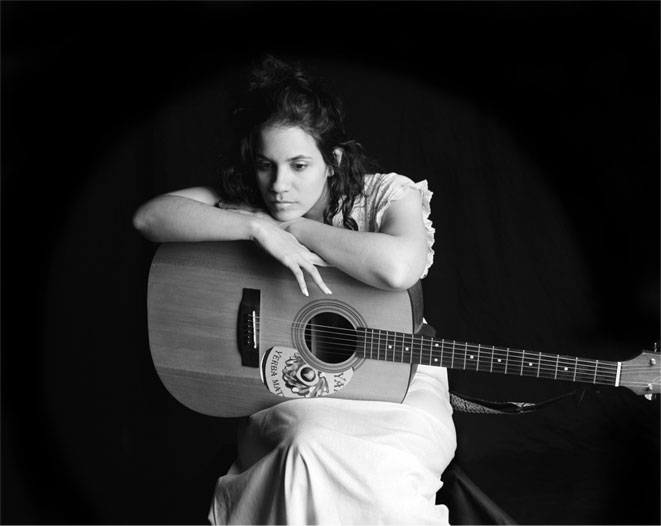
Nehedar, aka Emilia Cataldo, is an up-and-coming singer songwriter in the NYC area but not my usual blog post focus. While a fine musician and an observant Jew, her writing and stage persona isn’t obviously or easily categorized as Jewish. But Cataldo’s experience of becoming Orthodox and navigating pressures from the Jewish community (Orthodox, liberal, and secular) is well worth sharing and provides a lot of insight into the difficulties of being a Jewish musician in America.
Nehedar, which means means “wonderful” in Hebrew, writes quirky anti-folk music that puts a strong voice and guitar lead over rock, electronica, punk, and latin music instruments and rhythms. On her new album, High Tide, results vary from delicate observational moments (Tinkerbell) to anthemic anarchist screeds (Count Down The Days Til You’re Dead). I dig Nehedar but wish she’d dig a bit deeper into her lyrical material. I kept wanting to compare her to the disarming personal observations of Tori Amos and Amiee Mann, or the cynical world weariness of Firewater or the Pogues. Her lyrics, though, are a bit too shielded and externally focused. That makes them come across a bit superficial.
Here are the tracks from High Tide. Check 'em out and see what you think. Definitely worth a listen. For more info on Nehedar and High Tide, check out her website.
As Nehedar and I were emailing back and forth I decided a more formal interview might be a good way to get share her story and she graciously obliged.
Teruah: This is a Jewish music blog so we’ll talk both music and religion, but let’s talk music first. You’ve been active in the NYC singer songerwriter scene for a while and have got a new CD “High Tide” out. In your Pens Eye View interview you were asked about your style and said “I play with genre so much that it is pretty hard to define (my sound). Anything from electronic, punk, folk, rock, and then I’ll throw in Latin beats. Then my tonal approach will vary from sarcastic to dead serious.” From my listen to the HIgh Tide, that sounds right on. I think, though, it's fair to say that the songs on High Tide are very voice and lyric centered and give the audience the experience of listening to you singing to directly to someone standing just a bit offstage. Lots of “you” in the lyrics. So, who are you singing to?
Nehedar: The you’s on this record are everything from me, to the listener, a lover, a robot, society in general, hashem.. fantasy characters...
Teruah: There’s mix of instruments across the tracks, which range from voice and strummy guitar to rock arrangements to heavy electronica. What are you playing yourself and are the other instruments your regular band or are they friends borrowed for the album? How does this compare to your live show?
Nehedar: I play most of the guitars and electronic keyboard riffs, I have preferences for certain basslines that I write. I work with producer Craig Levy (Little Pioneer) in his Brooklyn studio. He also plays bass and drums and some guitars and keys. The band is a separate entity. Only a few songs in my past 5 albums had actual live band members on the recording, but none on this album. The trumpet on "Take It Apart" is the amazing Mike Shobe who is in the band on Louis C.K's show. He's fantastic and his solos make me very very happy, but he's a session player and if I perform this song live, it will be with my friend Dan Wagner of the Long Island band "Penguin Revolution."
Teruah: The reviews I’ve seen of High Tide (Brooklyn Rocks, LyricLounce, Jamsphere, PensEyeView) were pretty positive, but what’s up with that Heeb magazine post? Chicky (from HipsterJew) had some snarky fun busting on your song “The Song No One Hears.” Honestly, I have little use for Heeb magazine, their music writing in particular, but even for them that was petty. Did you see that one coming?
Nehedar: I don't think he knew what he was doing. I'm fairly certain that he was assigned a comedy hit piece. I actually acquiesced to be "made fun of" in order to get some coverage in Heeb, but I assumed that it would be by someone who is familiar with writing about music. It was totally my fault for assuming that. That writer didn't even hurt my feelings because he was so dumbly dismissive. If he had actually analyzed my work (at all!) and found it lacking then I would care more. It's so important to remember not to care what any critic says though! I hope I can get to that point, whether it's a compliment or an insult, to remember their only purpose is to help you spread the word. The fact is that I got a lot more positive attention via the comments in that piece. At the end of the day Chicky was more insulted by that whole fiasco than I was.
Teruah: When we started emailing, you mentioned that you’re a shomer shabbas Jew and that you got your start playing gigs with Jewish themed music groups Pharoah’s Daughter and Jake Marmer's Mima'amakim. How did that hookup happen?
Nehedar: Jake Marmer was a friend and Mi'ma'amakim was an alternative poetry journal that he started. They had great launch events where their writers would read their poetry and there would be fantastic music: Pharoah's Daughter, Raquy & the Cavemen, Pitom, Jon Madoff, that sort of thing. I guess he just saw something in me that made him want to put me on the stage!
Teruah: One thing that gets debated is how much there is, outside of the Orthodox / Chassidic community, a Jewish music scene. What do you think? Were you playing in a Jewish music scene? What about now?
Nehedar: To me, there is very much of a Jewish music scene, but I'm not sure about the distinction of religious vs. secular. I think it's more of a matter of affiliation and friendships. Some of the most religious people are in the least religious seeming bands and vice versa but I won't name names!
My first couple of shows were with Mi'ma'amakim and then I got my stage legs steady by performing at a weekly event called Hasids meets Hipsters where the amazing Sway Machinery were regulars. My band members have all been Jewish (except my dad!), and many went on to form their own bands (Glaser Drive, Stolen Brown Evergreen) We used to play shows together for years...
I've produced shows in NYC with Rav Shmuel, Y-Love, Aliza Hava, BlanketStatementStein (Back from the UK), Mick Lewis & the Fine Print, and played at shows with Sarah Aroeste, Chana Rothman, Jezzy & the Belles, and on and on. I had a good friend and roommate in college from Moshav Modi'im (the Carlebach yeshuv) I got to know all sorts of young Jewish musicians, some of whom are still active. When I first started playing live, I had the amazing Hayyim Danzig of Blue Fringe as my bassist, and this was at the peak of their popularity - he's on a couple of tracks on my first album! So yes, I think there is a scene in NYC at least, it might need a little watering now, but it's got strong roots!
Teruah: How’s it been juggling the pressures of being a gigging musician while also being an observant Jew? Are your fans aware of this? Has it created any positive or negative expectations you’ve had to deal with?
Nehedar: It's really hard. Really. I think the hardest part for me is that, there is very little opportunity to get bigger using the mainstream networks that are in place (festivals, conferences, events etc) without performing on Friday night. If someone contacts me about performing at their event, that event will usually be on a Friday. I don't really get asked to play at Jewish scene events. I also have limited opportunity to network and support other musicians in the mainstream world (either supporting them onstage or off) because so many important shows are on Shabbat. I end up in a double bind with this situation, I am too religious for the mainstream path, and not religious enough for the Jewish track (also the wrong gender).
Teruah: How about the religious community? Liberal Jews often don’t get the idea of observant Jews who aren’t cloistered inside the ultra-Orthodox / Chassidic world. And that world often doesn’t get how someone could be a Jewish musician who isn’t Torah oriented all the time. And then there are the religious limits including kol isha and sefira to deal with. How do you navigate all this?
Nehedar: Truthfully I don't navigate it well, it's all very awkward. As you can tell I haven't made any kind of peace on this issue. I strive to be good at what I do, and true to what I believe. Kol Isha is bad news. I think it's flat out incorrectly followed and understood. Addressing this is so low on the priorities (or maybe the opposite of the priorities) of anyone with any power in mainstream leadership that I don't think we'll see a change any time soon. I will be writing a guest blog on Jewesses with Attitude this month that addresses this perspective in greater detail. I thank G-d that there are rebbeim like Rabbi Avi Weiss, Rabbi Saul Berman and schools like Drisha and Yeshivat Chovovei Torah here in NYC that look at orthodox Judaism with a progressive lens. I was fortunate to attend Yeshiva University and to have been taken in by a wonderful modern orthodox family in 1999. Without them I would have believed the party line and thought that uttering a sentence like "I'm supposed to nullify my own mind to the torah" actually make me sound AWESOME. My Yeshiva University education provided me with some historical context of our culture's development which helps to put it in perspective. One great class with Rabbi Hidary (I forget his first name) in Yeshiva University taught me so much about the 2nd temple period including the development of the babylonian talmud that I wonder, If people were aware that the lifestyle of the Jews in Bavel was closer to modern orthodox than so called "ultra orthodox," how would that change or improve things? People learn Gemara, they don't tend to learn about the culture in Bavel from a historical perspective.
As a musician, I'm permitted to perform on Sefirah, but I won't plan a big event in NYC during sefirah out of respect for my fams (a term lovingly borrowed from NYC band Fifth Nation).
Teruah: Are you FFB (Frum from birth) or bal teshuva (came to Orthodoxy later in life)? I’m guessing the latter, right?
Nehedar: I came from a biracial nuclear family with no culture other than itself. When I chose to be orthodox, it was mainly because I needed the discipline and guidelines. My parents intentionally raised me without any boundaries or any culture to glean from (other than their counter culture). So I'm surprised, when you ask, how my music is Jewishly relevant, how much I want to have a real answer. I want to say that as a student of Jewish mysticism, I infuse my work with mystic concepts, I want to say that since my social identity is orthodox, I write from A Jewish Perspective, or that when, in a song, I am begging for help or for guidance, that I'm addressing a concept of G-d that is informed by Jewish teachings. But I don't know how much that stuff matters. If Jewish people want to see Jewish culture being very very Jewish, with bagels, lox, klezmer, etc. I will never be that because I don't want to be that. If I tried to do that kind of thing it would be false and I don't intend to spread more false messages in the world.
Teruah: I totally get that. The Jewish world is pretty segmented with each segment having its own set of expectations for music or art that is “Jewish.” In the last week I chatted with an Orthodox musician trying to convince him that Jewish music can be more than music that directly praises God (e.g. another interpretation of the Psalms) and talking with some secular “bagel” Jews who love klezmer bands and Israeli pop bands because, since the musicians are Jewish and the music has a cultural connection, the music makes them feel Jewish without asking them to deal with religion. Situating yourself in all of that is tough, not doubt.
Speaking of Jewish community reaction, in our first email you lamented that the Jewish hipsterati pretty much ignore you. I’m sympathetic, the contradictions of your life as a gigging musician and observant Jew peak my interest and should theirs, but I’d also like to challenge you a bit there. Like most Jewish American musicians, but unlike Pharoah’s Daughter or Jake Marmer, you’ve made the perfectly reasonable choice of not having your Jewish identity be central to your music or stage identity. Why should the Jewish hipsters, who are looking for ways to more publicly navigate their own Jewish identity, connect with you? What do you think they’re missing?
Nehedar: When I referenced "Jewish Hipsterrati" I was speaking more to say, Heeb, and the like who will write a long honest musical review of Yael Meyer (her mainstream identity is no more Jewish than mine), for instance, but will approach a review of my music with utter distain. I don't have illusions that I'm as Jewishly relevant as (the uber Jewish artists I enjoy like) Golem or Sarah Aroeste, but if I were to become successful, you know the mainstream Jewish publications would eat up my story with a spoon.
I guess I just wish that more people were like you, intellectually curious, and open to new things. I don't know if anyone's life is missing the presence of Nehedar music. But they won't know unless they check it out for themself and, personally, I have a lot to say and I'm tired of talking to myself!
Teruah: I get that. I’ve lamented a number of times that there are few magazines or websites that are interested in exploring what it means to make Jewish music or to be a Jewish musician regardless of how those things are defined. Since so much of Jewish life is establishing our Jewish identities in a complex secular and religious world, it’s frustrating that most magazines/websites seem to just pick their default definition, fawn on anything within it and marginalize anything outside it.
And I agree...I hope more folks in the Jewish world check out your music.
Before we wrap up, any additional info you’d like me to pass along? Any upcoming gigs we should know about?
Nehedar: Thank you so much Jack! I'm playing in Milwaukee, Wisconsin at the Circle A Cafe on Sunday July 22 at 9PM. I'll be accompanied by my dad on Saxophone and will be dressed in costume and shooting a music video that night with the audience!
Nehedar, which means means “wonderful” in Hebrew, writes quirky anti-folk music that puts a strong voice and guitar lead over rock, electronica, punk, and latin music instruments and rhythms. On her new album, High Tide, results vary from delicate observational moments (Tinkerbell) to anthemic anarchist screeds (Count Down The Days Til You’re Dead). I dig Nehedar but wish she’d dig a bit deeper into her lyrical material. I kept wanting to compare her to the disarming personal observations of Tori Amos and Amiee Mann, or the cynical world weariness of Firewater or the Pogues. Her lyrics, though, are a bit too shielded and externally focused. That makes them come across a bit superficial.
Here are the tracks from High Tide. Check 'em out and see what you think. Definitely worth a listen. For more info on Nehedar and High Tide, check out her website.
Teruah: This is a Jewish music blog so we’ll talk both music and religion, but let’s talk music first. You’ve been active in the NYC singer songerwriter scene for a while and have got a new CD “High Tide” out. In your Pens Eye View interview you were asked about your style and said “I play with genre so much that it is pretty hard to define (my sound). Anything from electronic, punk, folk, rock, and then I’ll throw in Latin beats. Then my tonal approach will vary from sarcastic to dead serious.” From my listen to the HIgh Tide, that sounds right on. I think, though, it's fair to say that the songs on High Tide are very voice and lyric centered and give the audience the experience of listening to you singing to directly to someone standing just a bit offstage. Lots of “you” in the lyrics. So, who are you singing to?
Nehedar: The you’s on this record are everything from me, to the listener, a lover, a robot, society in general, hashem.. fantasy characters...
Teruah: There’s mix of instruments across the tracks, which range from voice and strummy guitar to rock arrangements to heavy electronica. What are you playing yourself and are the other instruments your regular band or are they friends borrowed for the album? How does this compare to your live show?
Nehedar: I play most of the guitars and electronic keyboard riffs, I have preferences for certain basslines that I write. I work with producer Craig Levy (Little Pioneer) in his Brooklyn studio. He also plays bass and drums and some guitars and keys. The band is a separate entity. Only a few songs in my past 5 albums had actual live band members on the recording, but none on this album. The trumpet on "Take It Apart" is the amazing Mike Shobe who is in the band on Louis C.K's show. He's fantastic and his solos make me very very happy, but he's a session player and if I perform this song live, it will be with my friend Dan Wagner of the Long Island band "Penguin Revolution."
Teruah: The reviews I’ve seen of High Tide (Brooklyn Rocks, LyricLounce, Jamsphere, PensEyeView) were pretty positive, but what’s up with that Heeb magazine post? Chicky (from HipsterJew) had some snarky fun busting on your song “The Song No One Hears.” Honestly, I have little use for Heeb magazine, their music writing in particular, but even for them that was petty. Did you see that one coming?
Nehedar: I don't think he knew what he was doing. I'm fairly certain that he was assigned a comedy hit piece. I actually acquiesced to be "made fun of" in order to get some coverage in Heeb, but I assumed that it would be by someone who is familiar with writing about music. It was totally my fault for assuming that. That writer didn't even hurt my feelings because he was so dumbly dismissive. If he had actually analyzed my work (at all!) and found it lacking then I would care more. It's so important to remember not to care what any critic says though! I hope I can get to that point, whether it's a compliment or an insult, to remember their only purpose is to help you spread the word. The fact is that I got a lot more positive attention via the comments in that piece. At the end of the day Chicky was more insulted by that whole fiasco than I was.
Teruah: When we started emailing, you mentioned that you’re a shomer shabbas Jew and that you got your start playing gigs with Jewish themed music groups Pharoah’s Daughter and Jake Marmer's Mima'amakim. How did that hookup happen?
Nehedar: Jake Marmer was a friend and Mi'ma'amakim was an alternative poetry journal that he started. They had great launch events where their writers would read their poetry and there would be fantastic music: Pharoah's Daughter, Raquy & the Cavemen, Pitom, Jon Madoff, that sort of thing. I guess he just saw something in me that made him want to put me on the stage!
Teruah: One thing that gets debated is how much there is, outside of the Orthodox / Chassidic community, a Jewish music scene. What do you think? Were you playing in a Jewish music scene? What about now?
Nehedar: To me, there is very much of a Jewish music scene, but I'm not sure about the distinction of religious vs. secular. I think it's more of a matter of affiliation and friendships. Some of the most religious people are in the least religious seeming bands and vice versa but I won't name names!
My first couple of shows were with Mi'ma'amakim and then I got my stage legs steady by performing at a weekly event called Hasids meets Hipsters where the amazing Sway Machinery were regulars. My band members have all been Jewish (except my dad!), and many went on to form their own bands (Glaser Drive, Stolen Brown Evergreen) We used to play shows together for years...
I've produced shows in NYC with Rav Shmuel, Y-Love, Aliza Hava, BlanketStatementStein (Back from the UK), Mick Lewis & the Fine Print, and played at shows with Sarah Aroeste, Chana Rothman, Jezzy & the Belles, and on and on. I had a good friend and roommate in college from Moshav Modi'im (the Carlebach yeshuv) I got to know all sorts of young Jewish musicians, some of whom are still active. When I first started playing live, I had the amazing Hayyim Danzig of Blue Fringe as my bassist, and this was at the peak of their popularity - he's on a couple of tracks on my first album! So yes, I think there is a scene in NYC at least, it might need a little watering now, but it's got strong roots!
Teruah: How’s it been juggling the pressures of being a gigging musician while also being an observant Jew? Are your fans aware of this? Has it created any positive or negative expectations you’ve had to deal with?
Nehedar: It's really hard. Really. I think the hardest part for me is that, there is very little opportunity to get bigger using the mainstream networks that are in place (festivals, conferences, events etc) without performing on Friday night. If someone contacts me about performing at their event, that event will usually be on a Friday. I don't really get asked to play at Jewish scene events. I also have limited opportunity to network and support other musicians in the mainstream world (either supporting them onstage or off) because so many important shows are on Shabbat. I end up in a double bind with this situation, I am too religious for the mainstream path, and not religious enough for the Jewish track (also the wrong gender).
Teruah: How about the religious community? Liberal Jews often don’t get the idea of observant Jews who aren’t cloistered inside the ultra-Orthodox / Chassidic world. And that world often doesn’t get how someone could be a Jewish musician who isn’t Torah oriented all the time. And then there are the religious limits including kol isha and sefira to deal with. How do you navigate all this?
Nehedar: Truthfully I don't navigate it well, it's all very awkward. As you can tell I haven't made any kind of peace on this issue. I strive to be good at what I do, and true to what I believe. Kol Isha is bad news. I think it's flat out incorrectly followed and understood. Addressing this is so low on the priorities (or maybe the opposite of the priorities) of anyone with any power in mainstream leadership that I don't think we'll see a change any time soon. I will be writing a guest blog on Jewesses with Attitude this month that addresses this perspective in greater detail. I thank G-d that there are rebbeim like Rabbi Avi Weiss, Rabbi Saul Berman and schools like Drisha and Yeshivat Chovovei Torah here in NYC that look at orthodox Judaism with a progressive lens. I was fortunate to attend Yeshiva University and to have been taken in by a wonderful modern orthodox family in 1999. Without them I would have believed the party line and thought that uttering a sentence like "I'm supposed to nullify my own mind to the torah" actually make me sound AWESOME. My Yeshiva University education provided me with some historical context of our culture's development which helps to put it in perspective. One great class with Rabbi Hidary (I forget his first name) in Yeshiva University taught me so much about the 2nd temple period including the development of the babylonian talmud that I wonder, If people were aware that the lifestyle of the Jews in Bavel was closer to modern orthodox than so called "ultra orthodox," how would that change or improve things? People learn Gemara, they don't tend to learn about the culture in Bavel from a historical perspective.
As a musician, I'm permitted to perform on Sefirah, but I won't plan a big event in NYC during sefirah out of respect for my fams (a term lovingly borrowed from NYC band Fifth Nation).
Teruah: Are you FFB (Frum from birth) or bal teshuva (came to Orthodoxy later in life)? I’m guessing the latter, right?
Nehedar: I came from a biracial nuclear family with no culture other than itself. When I chose to be orthodox, it was mainly because I needed the discipline and guidelines. My parents intentionally raised me without any boundaries or any culture to glean from (other than their counter culture). So I'm surprised, when you ask, how my music is Jewishly relevant, how much I want to have a real answer. I want to say that as a student of Jewish mysticism, I infuse my work with mystic concepts, I want to say that since my social identity is orthodox, I write from A Jewish Perspective, or that when, in a song, I am begging for help or for guidance, that I'm addressing a concept of G-d that is informed by Jewish teachings. But I don't know how much that stuff matters. If Jewish people want to see Jewish culture being very very Jewish, with bagels, lox, klezmer, etc. I will never be that because I don't want to be that. If I tried to do that kind of thing it would be false and I don't intend to spread more false messages in the world.
Teruah: I totally get that. The Jewish world is pretty segmented with each segment having its own set of expectations for music or art that is “Jewish.” In the last week I chatted with an Orthodox musician trying to convince him that Jewish music can be more than music that directly praises God (e.g. another interpretation of the Psalms) and talking with some secular “bagel” Jews who love klezmer bands and Israeli pop bands because, since the musicians are Jewish and the music has a cultural connection, the music makes them feel Jewish without asking them to deal with religion. Situating yourself in all of that is tough, not doubt.
Speaking of Jewish community reaction, in our first email you lamented that the Jewish hipsterati pretty much ignore you. I’m sympathetic, the contradictions of your life as a gigging musician and observant Jew peak my interest and should theirs, but I’d also like to challenge you a bit there. Like most Jewish American musicians, but unlike Pharoah’s Daughter or Jake Marmer, you’ve made the perfectly reasonable choice of not having your Jewish identity be central to your music or stage identity. Why should the Jewish hipsters, who are looking for ways to more publicly navigate their own Jewish identity, connect with you? What do you think they’re missing?
Nehedar: When I referenced "Jewish Hipsterrati" I was speaking more to say, Heeb, and the like who will write a long honest musical review of Yael Meyer (her mainstream identity is no more Jewish than mine), for instance, but will approach a review of my music with utter distain. I don't have illusions that I'm as Jewishly relevant as (the uber Jewish artists I enjoy like) Golem or Sarah Aroeste, but if I were to become successful, you know the mainstream Jewish publications would eat up my story with a spoon.
I guess I just wish that more people were like you, intellectually curious, and open to new things. I don't know if anyone's life is missing the presence of Nehedar music. But they won't know unless they check it out for themself and, personally, I have a lot to say and I'm tired of talking to myself!
Teruah: I get that. I’ve lamented a number of times that there are few magazines or websites that are interested in exploring what it means to make Jewish music or to be a Jewish musician regardless of how those things are defined. Since so much of Jewish life is establishing our Jewish identities in a complex secular and religious world, it’s frustrating that most magazines/websites seem to just pick their default definition, fawn on anything within it and marginalize anything outside it.
And I agree...I hope more folks in the Jewish world check out your music.
Before we wrap up, any additional info you’d like me to pass along? Any upcoming gigs we should know about?
Nehedar: Thank you so much Jack! I'm playing in Milwaukee, Wisconsin at the Circle A Cafe on Sunday July 22 at 9PM. I'll be accompanied by my dad on Saxophone and will be dressed in costume and shooting a music video that night with the audience!
Wednesday, July 11, 2012
Rita's Persian Album
As I've mentioned, I have hard time tracking Israeli music. So I routinely run into musicians that are described as "the most famous" in Israel, only to say...who? That happened again this week when I ran across the music of Rita whom, according to wikipedia, "is an Iranian-born Israeli pop singer and actress, notable for being the most famous female singer in Israel."
Typically, I wouldn't bite on this sort of thing. Israeli pop is still pop and I usually don't find it that interesting. But Rita's new album "My Joys" is fascinating and, well, awesome. Like Ofra Haza's wonderful Yemeni music recordings, "My Joys" revisits Rita's native Persian language and the folk music her youth...both in a contemporary pop context. The album wen't gold in Israel and this video shows why....
Shah Doomad (Live From Tel Aviv 2012) - Rita
Rita's toured the US before, but not recently. I hope she comes around again soon.
Shah Doomad (Live From Tel Aviv 2012) - Rita
Rita's toured the US before, but not recently. I hope she comes around again soon.
Tuesday, July 10, 2012
Yale Strom and Elizabeth Schwartz in concert in Ann Arbor!
Hey Michiganders, this is a don't miss concert. Be there! I will.
Yale Strom and Elizabeth Schwartz in concert
Saturday July 14, 2012 - 7:00PM
Temple Beth Emeth Brotherhood presents an exciting evening celebrating Klezmer Music in America. Known widely for their band Hot Pstromi, they will be screening Mr. Strom's 30-minute documentary "A Great Day on Eldridge Street", and performing a concert of Klezmer music afterwards. The film documents an historic gathering in 2007 of musicians and singers from throughout the world for an iconic photo, and to make music.
Violinist Yale Strom's music draws on his extensive European field research. He is regarded as one of the world's leading scholar-ethnographer-artists of klezmer music and history.
The unique soulful vocals of Elizabeth Schwartz' have brought her acclaim from many quarters. She is the first woman invited to sing at New York City's landmark Eldridge Street Synagogue.
Tickets: $15 adults, $10 seniors.
Temple Beth Emeth
2309 Packard Rd
Ann Arbor, MI 48104
Contact: Ralph Katz 734-663-1288 or the TBE Office 734-665-6744
Yale Strom and Elizabeth Schwartz at Festiwal Zachor, Poland 2009
About the film "A GREAT DAY ON ELDRIDGE STREET"
On October 12, 2007, over one hundred klezmer musicians and Yiddish singers gathered on the steps of New York City’s Eldridge Street synagogue for a once-in-a-lifetime photo shoot. Brought from around the world, these musicians represent the most influential klezmer artists of the revival and in the world today. This significant event was noted for its participants (ranging from Theo Bikel to John Zorn) and was followed by the world’s longest klezmer march, when these musicians took to the streets of the Lower East Side for a parade and impromptu outdoor concert. As they marched, onlookers began to follow along curious to see what this celebration was all about. It was Yiddish street theatre at its best!
Over the next two evenings, the participants performed formally at City University’s Martin E. Segal Theatre and Symphony Space. A GREAT DAY ON ELDRIDGE STREET portrays all of these events. This film not only chronicles this extraordinary weekend, but celebrates the revival of klezmer music and Yiddish song that has now become one of the main soundtracks for Jewish culture throughout the world today with humor, pathos… and of course, great music.
Monday, July 9, 2012
Freedom Season's "Along the Way" - the best Jewish folk rock album of the year.
For the last couple of days I've had Freedom Season on heavy heavy rotation. I'm on another work trip and this is exactly the kind of soul music to get me through. Listening to the YouTube video below, you'll definitely get a strong Shlomo Carlebach vibe. Well done, but pretty much everyone with tzizit and a guitar wants to be Carlebach, right?
Ok. Now listen to the tracks from their studio album, Along the Way. Check out Taste of Heaven, Havdalah, or Old Friend. Fantastic harmonies and melodies and bluesy acoustic riffs that echo 1960's and early 1970's Americana folk pop bands like the Byrds. And strong strong well crafted lyrics that pick up some deep ideas without taking easy 'let's do another arrangement of one of the psalms/zimrot/Carlebach/classic niggun' shortcuts*. Their song Havadallah is going to become a camp standard. You wait and see.
Wow. Where did these guys come from? Where have they been all my life? The Cool Jew blog recently compared Freedom Season to 8th Day. I can see the comparison, but I'm not buying it. 8th Day's got a much more straight up modern rock sound. Freedom Season's way more the softer side of folk rock. I will say that if they can get their stage show up to the level of the album, they'll be selling out halls the way that 8th Day does and Blue Fringe did.
In addition to scoring "Along the Way" through Bandcamp, you can grab it from iTunes and Amazon MP3. You can also follow their adventures on Facebook. And you really should.
* Just to be clear here, I love "psalms/zimrot/Carlebach/classic nigguns" as much as the next Jewish music obsessed guy. I'm just excited to see a couple of songwriters who can really write lyrics and aren't afraid to divert from the traditional Jewish community's standard music formula's.
Thursday, July 5, 2012
Introducing, The Y-Studs
The great thing about college campuses is there's always another gang of vocalists ready to dedicate their vocal chords to imitating drum kits, guitars, and synths in the name of acapella music. In the Orthodox world, there is extra glory for the brave acappelites... they are single-handedly (single vocal-cordedly?) saving the Orthodox community from a boring music-free Sefira and saving concert promoters from having to rent back-line gear. While the Maccabeats may currently be reigning supreme in the Jewish acapella world, Yeshiva University's Y-Studs are on the scene with a new video and album out that should get then a lot of attention. The video, which is their adaptation of Reva L'Sheva's classic "Ahavat Israel Baneshama" (lyrics) doesn't have the breakout flair of the Maccabeats pop-music mashups. But the song choice is great, the vocals are fine and, if you're into Jewish acapella, it's well worth checking out. The video, I should note, is one of the stranger one's I've seen lately. Did someone turn the Village People loose on YU's campus? Just asking.
If you dig the song, it's worth checking out Reva L'sheva. They were a wonderful post-Carlbach group that was active from the mid 90's through the mid 00's. Their front man, Yehuda Katz is still active and put a new album out recently. Reva l'Sheva's albums are still available as well.
Wednesday, July 4, 2012
Happy 4th of July: Irving Berlin singing God Bless America
Happy 4th, folks. Here's the man himself, singing it on the Ed Sullivan Show. Well, a short clip of it at any rate.
While Berlin wrote the song, and then dropped it, from a military review called Yip Yip Yaphank in 1918, Berlin didn't reintroduced for another 20 years until he brought the song back as a peace song on Armistice Day in 1938, sung by Kate Smith on her radio show. The intro lyric to the song, which isn't sung anymore, is fascinating.
The storm clouds across the sea clearly reference (as written) World War I but, as sung in 1938, also reference the looming Holocaust and World War II. I love how the last line sets up the main chorus (now the only part sung) as a prayer, a supplication. I get frustrated with some patriotic materials that suggest that God owes us something merely for being Americans. I much prefer patriotic materials that position us as humbly asking God that, if we live up to our obligations and ideas, we might be thrown a little guidance and wisdom for maintaining our home sweet home.
While Berlin wrote the song, and then dropped it, from a military review called Yip Yip Yaphank in 1918, Berlin didn't reintroduced for another 20 years until he brought the song back as a peace song on Armistice Day in 1938, sung by Kate Smith on her radio show. The intro lyric to the song, which isn't sung anymore, is fascinating.
While the storm clouds gather far across the sea,
Let us swear allegiance to a land that's free,
Let us all be grateful for a land so fair,
As we raise our voices in a solemn prayer.
The storm clouds across the sea clearly reference (as written) World War I but, as sung in 1938, also reference the looming Holocaust and World War II. I love how the last line sets up the main chorus (now the only part sung) as a prayer, a supplication. I get frustrated with some patriotic materials that suggest that God owes us something merely for being Americans. I much prefer patriotic materials that position us as humbly asking God that, if we live up to our obligations and ideas, we might be thrown a little guidance and wisdom for maintaining our home sweet home.
God bless America,
Land that I love.
Stand beside her, and guide her
Through the night with a light from above.
From the mountains, to the prairies,
To the oceans, white with foam
God bless America, My home sweet home
God bless America, My home sweet home.
Tuesday, July 3, 2012
Moshe Hecht's New Video
Moshe Hecht, a Hasidic rocker with a radio friendly 90's college rock sound, dropped his debut album last fall. I blogged about its first single, Lamplighters, briefly when it first came out. Half a year later, and a brand new video for the album's lead track "Believers" is out. The video seems to be based on a live concert recording from the Knitting Factory. Based on the video, I can see Hecht picking up a lot of Blue Fringe fans.
Check it out...
You can grab the debut album and the live recording of Believers from a variety of places including Mostly Music. For the price of your email address for his mailing list, you can get the rest of the Knitting Factory concert (without Believers) at Hecht's website.
Check it out...
You can grab the debut album and the live recording of Believers from a variety of places including Mostly Music. For the price of your email address for his mailing list, you can get the rest of the Knitting Factory concert (without Believers) at Hecht's website.
Zion Unit Jerusalem Sound System
Israeli DJ Zion Unit makes trip hop soundscapes I want to live inside. Press play on Jericho.
For more info, check out Zion Unit's Facebook, Reverbnation, and Soundcloud pages.
"ZION UNIT is an art ensemble originally from Reunion Island and based in France, UK and Israël. His musical work is an exotic and disorder opera kitsch, intimate, baroque, tinted soul, funk, trip hop, moods filmesques, colors and ethnic psychedelics."
For more info, check out Zion Unit's Facebook, Reverbnation, and Soundcloud pages.
Monday, March 19, 2012
Back in the Day: Alon Braier's Mizrachi Musician Cards
Alon Braier is a freelance graphic artist and illustrator based in Tel Aviv. I recently ran across his fantastic project "Back in the Day (בזכרי ימים ימימה)" which consists of a boxed set of cards that pay "tribute to the great Israeli mizrachi music pioneers of the 60's and 70's." Looking to get a bit more information, and hopefully score a set of the cards, I contacted Braier about the project.Teruah: What was origin of the Mizrachi musician card project? Was this something you did as a freelancer for a customer? A personal project? Are you personally a fan Mizrachi music?
Braier: I started working on the Mizrachi musician card project, or "back in the day" as it translates from its Hebrew name, about two years ago. It was my final project before achieving a bachelor's degree at the Bezalel Academy of Art and Design in Jerusalem. On my junior year I spent one semester as an exchange student at the Maryland Institute College of Art in Baltimore, and while visiting New York City on spring break, I stumbled upon a beautiful, illustrated trading card deck named "Legends of Rap". I was blown away by the whole idea of illustrated music related trading cards, It was then that I decided to make my own deck as a final project when I'll get back to Israel.
Mizrachi music was never exactly my cup of tea (at least not before the project). I chose to focus on that specific genre because I wasn’t familiar with it. Back then, it occurred to me that by digging into a subject I know very little about my interest will stay high throughout the process.
I also wanted my project to deal with social matters and I knew Mizrahi music always carried a big social and political baggage. Mizrahi music was created by migrating Jews from the Arab countries of the Middle East and North Africa who created a unique musical style that combines elements of Arabic, Greek, and Turkish music. At the early days of Israeli radio this type of music was excluded from the airwaves, basically because the people who owned the media and the main cultural institutions in those years where of Ashkenazi heritage and preferred a more European taste. At the beginning of the 80's Mizrahi music suddenly got in to the playlists and became very popular until this very day. The sad thing is that in order to reach this state the genre lost most of its authenticity and unique musical roots. Today it's basically all about simple pop songs on an Arabic scale with some occasional oriental instrument thrown in the mix. My project is focusing on the early days, the 60's and 70's, when Mizrahi music was a special fusion of east and west, a one of a kind blend of rock soul and middle eastern music.
Teruah: Who is included?
Braier: The deck has all the great pioneers of the genre, people who became legends like Zohar Argov (pictured above) – the king of Mizrahi music (5) and Aviu Medina (1) the composer who wrote many mizrahi classics like "Haperach Begani" http://www.youtube.com/watch?
Among the well known artists I illustrated some truly underrated ones, like Aris San (10)http://www.youtube.com/watch?I really wanted to include Yosef Ben Israel, the first DJ who actually played Mizrahi music on the radio, but I couldn't find any pictures of him.
Teruah: Are these cards available for purchase?
Braier: I'm afraid not, I did have a few of them in a handmade box with a poster in every pack but they were sold out pretty quickly (I have only one complete pack left, which I carry with me to job interviews) but I'm planning to re-print them sometime during this year.
Teruah: Have you done any additional music related projects? Do you plan any?
Braier: Since the Mizrahi project came out I did some editorial illustrations for local papers that had article about Mizrahi culture. I also did the cover art for Lo dubim's debut album http://www.youtube.com/watch?
-----

So no cards for me. At least not yet. But go check out the full set on Braier's website.
As a final treat, here's Braier's favorite, the great Jo Amar, singing Great My Cousin. Amar, who passed away in 2009, was a widely popular Moroccan born vocalist whose 1971 "Shalom le-ben dodi" was one of the first big Mizrachi hits.
Jo Amar Greet my cousin ג'ו עמר שלום לבן דודי
Subscribe to:
Posts (Atom)